Every day millions of believers ask an important question: what holiday is today in the Church calendar, what are the folk signs and customs, what is strictly forbidden on this day, whose name day is celebrated, and how to call down God’s blessing on the whole year through a strong prayer. September 1 is one of the most important days of the ecclesiastical year (new calendar / Revised Julian): the Orthodox Church celebrates the Beginning of the Indiction — the Church New Year, and commemorates Saint Symeon the Stylite and his mother Martha, as well as the Synaxis of the Saints of Vinnytsia. In folk tradition the day was called Simeon’s Day, and in modern Ukraine it is also the First Day of School, which the Church has long accompanied with a prayer of blessing for studies. This guide explores the meaning of the Church New Year, the life of Symeon the Stylite, the folk traditions of the day, and offers the canonical prayers for the new year.
1. The Beginning of the Indiction: Why the Church Year Starts on September 1
The Indiction is the Church New Year — the beginning of the new “summer” (year) in the liturgical life of the Church. The word comes from the Latin “indictio”, the periodic censuses and tax edicts of the Roman Empire; in time, September 1 became the official beginning of the civil year in Byzantium, and the Church sanctified this day as the beginning of the ecclesiastical year. According to Church tradition, it was around this autumn season that the Lord Jesus Christ entered the synagogue in Nazareth, opened the book of the prophet Isaiah and read: “The Spirit of the Lord is upon Me… He has sent Me to proclaim the year of the Lord’s favor” (Lk. 4:18-19; cf. Isa. 61:1-2) — and from this “acceptable year” the Church begins its year.
The New Year feast is not about the calendar but about the blessing of time. On this day the Church prays with a special troparion: “Maker of all creation, who has set times and seasons in Your power, bless the crown of the year with Your goodness, O Lord; keep in peace Your people and Your city by the prayers of the Theotokos, and save us.” The Church asks not for a “successful year” in a commercial sense, but for the crown of the year in goodness — that every season may bear fruit, peace and salvation. In Ukraine, September 1 also honors the Synaxis of the Saints of Vinnytsia — all the saints who shone forth in the land of Vinnytsia.
2. The Orthodox Feast — Saint Symeon the Stylite and His Mother Martha
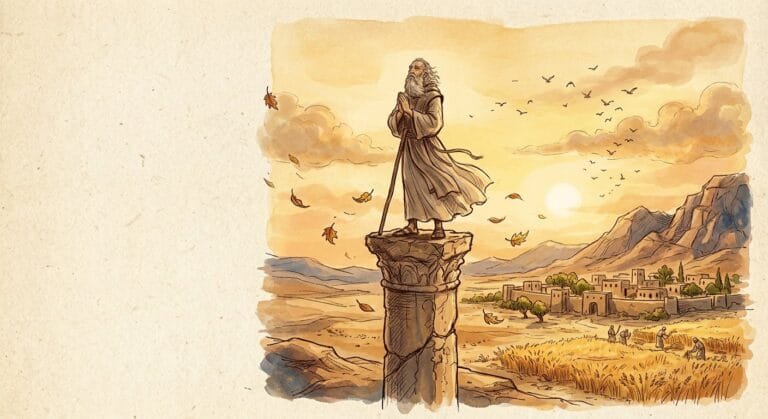
Saint Symeon the Stylite (c. 390–459) is one of the most remarkable Christian ascetics, the founder of the pillar-dwelling way of life. Born in Syria to simple Christians, he herded sheep in his youth. One day, hearing the Gospel Beatitudes in church, the young man was so moved that he resolved to give his life to God: he entered a monastery and at eighteen took monastic vows. His zeal for fasting and prayer was so intense that even the abbot grew alarmed and counselled moderation; when Symeon did not listen, he was asked to leave. He lived in a cave, and when people began flocking to him for counsel and healing, seeking solitude he did what no one had done before: he built a pillar and lived on top of it — at first a few meters high, eventually more than forty. On the pillar the saint spent about forty years in prayer, fasting and preaching; thousands climbed to hear him, from emperors to peasants, and he reposed in deep old age, leaving disciples and a whole tradition of stylitism.
Together with Symeon the Church remembers his mother Martha, a pious Christian who raised her son in the faith. According to tradition, when Symeon departed for his ascetic struggle, Martha searched for him for two years, then accepted his choice and devoted herself to prayer; after her repose the saint was consoled by a vision of his mother in glory. This detail makes the feast especially close to parents: September 1 is a day when the Church honors both the great feat of the son and the quiet maternal faithfulness that nourished it. Believers pray to Saint Symeon for patience in trials and healing of soul and body, and mothers pray for their children who begin a new school year (on praying with children, see our article on prayer in modern life).
3. The Catholic Feast — Saint Giles and the Day of Prayer for Creation
In the Roman Catholic Church, September 1 honors Saint Giles (†720), hermit and abbot of Provence, one of the most popular saints of medieval Europe, patron of travelers, shepherds and all who care for the weak. Legend says Giles lived in the wilderness, fed by a doe’s milk, and that the doe, wounded by a royal hunter, led the king to his cave — so the saint became known and founded the monastery that grew around him. Since 2015, September 1 is also observed as the World Day of Prayer for the Care of Creation — a common date for Catholics and Orthodox (the Ecumenical Patriarchate proclaimed it earlier); it opens the “Season of Creation”, which lasts until October 4, the feast of Saint Francis of Assisi. For Ukraine this day is an occasion to pray for the native land, for the harvest, and for those who defend and cultivate it.
4. What Is Forbidden on September 1 — Folk Signs and Customs
In the folk calendar September 1 is Simeon’s Day: summer is “seen off”, and with it the old year ended — the new year began. Autumn enters its rights, but before that it gives people the “Indian summer”. The main customs of the day: to thank God for the summer lived and the harvest, to ask blessing on the new year and new labors, and in modern Ukraine to pray for schoolchildren and students at the start of the school year. In some regions it was customary on Simeon’s Day to finish old affairs and repay debts, so as not to carry them into the new year, and to begin new work with prayer.
Folk signs for September 1: a warm and clear day promises a long warm autumn; much spiderweb flying — a clear autumn and cold winter; morning fog over the ground — a mild winter; cranes flying high and slowly — a lingering autumn; thunder — a warm long autumn. What is forbidden on September 1: quarreling and conflict — a quarrel on the New Year was believed to bring troubles for the whole year; beginning long journeys without necessity; lending or borrowing money, so as not to carry want into the new year; swearing, complaining of one’s fate, refusing help; meeting the new year in laziness — the year begins as you meet it. Instead, the day is best given to prayer, thanksgiving for the summer, reconciliation with neighbors and a good beginning of new undertakings.
5. The Spiritual Laws of Life: the Law of Thanksgiving and the Commandment of Love
The prayer life of a Christian obeys unshakable spiritual laws, and the New Year is the time to recall them especially. The first is the law of thanksgiving and spiritual abundance. The Apostle Paul teaches: “In everything give thanks, for this is the will of God in Christ Jesus for you” (1 Thess. 5:18). The Church year begins not with plans and anxieties but with thanksgiving for the summer lived, for the harvest and for all who were near. When we sincerely thank God for the past and with faith ask blessing for the new, we release the power of His grace, which protects our families from dangers, illness and material want. The second is the fulfilment of the Commandments of Love for God and neighbour (Mt. 22:37-39): Saint Symeon, standing on his pillar, did not shut himself off from people — he prayed for thousands; Martha nourished him with her faithfulness. Let us begin the new year with a work of mercy — and the whole year will pass under the sign of God’s blessing.
6. Hesychast Watchfulness (Nepsis) and Prayer on the Rope
In Orthodox hesychasm and the Athonite tradition, spiritual watchfulness (nepsis) is the foundation of the soul’s salvation, and the life of Symeon the Stylite is one of the brightest schools of watchfulness: forty years on a pillar, with nowhere to flee from one’s own thoughts — only prayer and heaven. When our mind is attacked by anxious thoughts about the new year — about money, work, the children’s health — the hesychasts advise immediately cutting them off with the short, rhythmic prayer on the rope (komboskini). A short prayer for the New Year:
Lord Jesus Christ, Son of God, who holds times and seasons in Your power, bless the new year of my life, keep my family in peace, and have mercy on me, a sinner.
7. The Power of Communal Prayer
Communal prayer has the promise of extraordinary power from the Lord Himself: “For where two or three are gathered together in My name, there am I in the midst of them” (Mt. 18:20). On the New Year the whole Church prays together — and this is the best way to begin the year. Dear brothers and sisters! We invite you to join the prayer circle on Pray.ee. If your children begin the school year, if you yourself begin a new undertaking, or if you are going through illness, hardship or danger, write the names (for health and God’s protection) and your needs in the comments below. Our great Christian family will remember them daily in prayers before the Throne of God, asking blessing on the new year, peace and a good year.
8. A Living Testimony: Prayer on the Church New Year
Parish chronicles and home testimonies preserve many stories of blessing received in prayer on the New Year. Halyna from the Khmelnytskyi region tells one of them. Last year September 1 was a day of anxiety for her family: her son was to enter tenth grade in a new city after the move, her husband had just returned from service and was looking for work, and her elderly mother was ill. Instead of the usual fuss, the family decided to begin the day with common prayer: they read the troparion of the New Year, asked blessing on the son’s studies and the father’s work, and in the evening lit candles for the health of all their own. “We did not ask for much — we asked for peace and for God to hold us together,” Halyna recalls. The year was not easy, but, in her words, every great anxiety ended as if “someone had already thought of us beforehand”: the son found friends in the first week, the father got a job through an old acquaintance, and the mother recovered by Christmas. “Now September 1 is the most important day of autumn for us,” says Halyna. “Because the year begins not from the calendar, but from the One with whom you begin it.”
9. The Strongest Canonical Prayers of the Day
Troparion of the Beginning of the Indiction (Church New Year), Tone 7:
Maker of all creation, who has set times and seasons in Your power, bless the crown of the year with Your goodness, O Lord; keep in peace Your people and Your city by the prayers of the Theotokos, and save us.
Troparion of Saint Symeon the Stylite, Tone 1:
You became a pillar of patience and emulated the forefathers, O righteous one: Job in his sufferings, Joseph in his trials, and the life of the bodiless while dwelling in the body, O Symeon our father; entreat Christ God to save our souls.
Prayer for the New Year (home prayer of the day)
Lord our God, Creator of times and seasons! We thank You for the summer that has passed, for all Your mercy, manifest and hidden, and we ask: bless the new year of our life. Grant us peace and health, abundance for good deeds and patience in sorrows; keep our children in every place, bless those who begin studies and work, and those who defend our land. Teach us to begin this year with thanksgiving and to live it in love, so that every day of the new year may be a step toward You. Amen.
10. Frequently Asked Questions (FAQ)
What is the Indiction and why does the Church year begin on September 1?
The Indiction is the Church New Year. In the Byzantine Empire September 1 was the beginning of the civil year (from Latin “indictio” — a tax census), and the Church sanctified this day as the beginning of the liturgical year. According to tradition, it was in this season that Christ proclaimed in the Nazareth synagogue “the year of the Lord’s favor” (Lk. 4:19), so the Church begins its year with a prayer for the blessing of time.
Who was Symeon the Stylite?
Saint Symeon the Stylite (c. 390–459) was a Syrian ascetic, founder of pillar-dwelling: he spent about forty years on a pillar in prayer, fasting and preaching, with the gift of healing and counsel. He is commemorated on September 1 together with his mother Martha; the saint is a model of patience and unfaltering faithfulness to God.
Whose name day is September 1, and what is prayed for on this day?
By the new calendar, Symeon and Martha celebrate their name days, as well as Natalia and Tatiana whose saints are commemorated on this day. On the New Year people pray for the blessing of the new year, peace for families, harvest and good studies for children; to Saint Symeon — for patience in trials and healing.
11. Sources
1. Simeon Stylites: life and the feat of pillar-dwelling — Wikipedia article: en.wikipedia.org (Simeon Stylites).
2. Indiction: origin and meaning of the Church New Year — Wikipedia article: en.wikipedia.org (Indiction).
3. Saint Giles: life and veneration — Wikipedia article: en.wikipedia.org (Saint Giles).
4. Season of Creation: September 1 – October 4 — Wikipedia article: en.wikipedia.org (Season of Creation).
5. 1 вересня: церковне свято, Новоліття, Симеон Стовпник — Ukrainian-language version of this article: pray.ee (1 вересня).