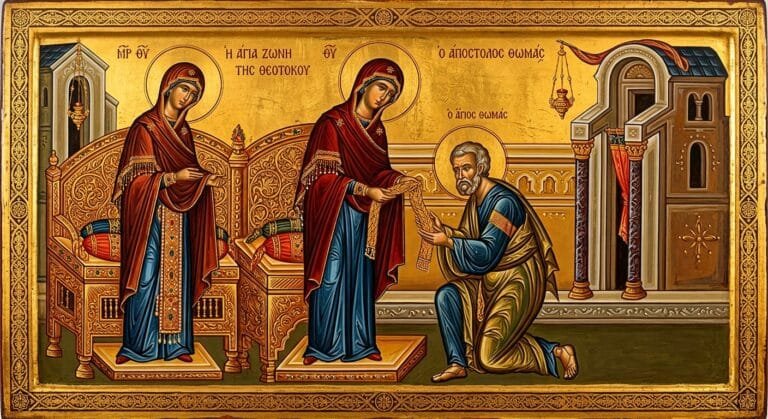
Every single day, millions of believers around the globe actively ask the essential question: what holiday is today according to the official church calendar, what name days are being celebrated, what traditional folk signs are associated with this day, and how can one employ a powerful, heartfelt prayer to obtain divine protection, health, and peace for the household. Dedicating our first thoughts of the day to the Savior acts as an anchor of quietude, enabling the soul to rise above the daily ocean of worries, anxieties, and debts. August 31 is an incredibly important, solemn, and highly revered day in both the Eastern Orthodox and Roman Catholic liturgical calendars. On this day, the Eastern Orthodox Church celebrates the Placing of the Honorable Belt of the Most Holy Theotokos (Placing of the Honorable Belt of the Theotokos), while the Roman Catholic community honors Saints Joseph of Arimathea and Nicodemus, and commemorates Saint Aidan of Lindisfarne. This comprehensive guide deeply explores the biblical hagiography of these great saints, the cultural and folk traditions, clarifies popular misconceptions, examines fundamental spiritual laws of grace, and contains powerful canonical prayers.
Understanding the structure of the liturgical year helps us grasp that each day is dedicated to a specific saint or an essential salvation event. Our ancestors always began their days with prayer, as it is the key to mental rest. When we recite the Our Father or request the powerful intercession of the Blessed Virgin Mary in the morning before starting work or in the evening to quiet the soul, we establish a robust spiritual boundary around our family. Today we also recall the immense value of patristic wisdom for the daily sobering of our mind.
To strengthen your faith and mental sobriety (nepsis) amidst daily temptations, we highly recommend reading the Eastern Christian treasury of spirituality: The Philokalia translated into Ukrainian by S. Matiyash, where you will find invaluable patristic teachings on how to acquire inner peace.
1. Eastern Orthodox Feast — Placing of the Honorable Belt of the Most Holy Theotokos
In the Eastern Orthodox liturgical calendar, August 31 is the day of remembrance for one of the most beloved Marian feasts — the Placing of the Honorable Belt of our Most Holy Lady the Theotokos. This celebration is dedicated to a holy relic of the Christian world — a belt hand-woven by the Virgin Mary from camel hair and worn during her earthly life.
According to Church tradition, during her glorious Dormition and Assumption into Heaven, the Most Holy Theotokos appeared to Apostle Thomas, who had arrived late for her burial and was deeply grieved. To console the holy apostle, the Mother of God threw down her honorable belt from Heaven as a visible sign of her eternal protection and maternal love. Thomas received the relic with great awe and reverence. For several centuries, the belt was kept by devout Christians in Jerusalem. At the end of the 5th century, during the reign of Emperor Arcadius, the relic was solemnly transferred to Constantinople and placed in a golden chest in the magnificent Chalcoprateia Church.
Numerous miracles are associated with this holy belt. One of the most famous occurred in the early 10th century, when the wife of Emperor Leo VI the Wise, Empress Zoe, fell gravely ill due to attacks by an evil spirit (a severe nervous and mental disorder). In a dream, she had a vision that she would be healed if the belt of the Theotokos was placed upon her. When the emperor turned to the patriarch, the chest was opened, and the belt was found to be completely undamaged by time. As soon as the patriarch laid the belt on the sick empress, she was instantly delivered and fully healed. Since then, the annual feast of the Placing of the Belt was established. Today, portions of the honorable belt are kept on Mount Athos at the Vatopedi Monastery, as well as in Cyprus and Syria, bringing healing to the sick, resolving infertility, and delivering souls from emotional distress.
2. Roman Catholic Feast — Saints Joseph of Arimathea, Nicodemus, and Saint Aidan of Lindisfarne
In the Roman Catholic liturgical tradition, August 31 is the day of remembrance for two prominent biblical figures — Saints Joseph of Arimathea and Nicodemus, as well as the great Celtic missionary — Saint Aidan of Lindisfarne.
Saints Joseph of Arimathea and Nicodemus: They were secret disciples of Lord Jesus Christ among the Jewish leaders (members of the Sanhedrin). Nicodemus came to Jesus at night to hear His teachings about being born again of the Spirit, and openly defended Him before the Sanhedrin. Joseph of Arimathea, a wealthy and pious man, showed incredible courage after the crucifixion of the Savior: he went to the Roman governor Pontius Pilate and requested the body of Jesus for burial. Together with Nicodemus, they took the Holy Body down from the Cross, wrapped it in fine linen with spices, and buried Him with honor in Joseph’s new tomb in a garden near Golgotha. They are prime examples of courage and fidelity to Christ during the hardest trials.
Saint Aidan of Lindisfarne (circa 590–651 AD): A great Irish monk and missionary, the first bishop of the island of Lindisfarne in Northumbria (England). He became famous for his extraordinary gentleness, humility, and active charity. Aidan traveled on foot from village to village, preaching the Gospel to the poor, redeeming slaves, and establishing monasteries and schools. He is called the «Apostle of Northumbria», and his life is a model of true pastoral ministry.
3. What Not to Do on This Day — Traditions, Folk Signs, and Demystifying Superstitions
In traditional folklore, this day marked the official end of summer. Peasants began the active harvesting of root crops like carrots and beets, baked festive pies, and shared them with neighbors, strengthening community ties.
What is Strictly Forbidden to Do on August 31:
- Do not argue with your loved ones or harbor anger or grudges — the Mother of God is the Queen of Peace, and hostility on this day blocks her maternal protection.
- Avoid refusing help to the poor, orphans, or travelers — Saint Aidan and Saints Joseph and Nicodemus dedicated their lives to charity, so rejecting those in need can bring hardship to the household.
- Do not lend money or take on new financial debts in the evening — this can lead to prolonged material struggles.
- Avoid heavy, dirty housework after noon — it is better to dedicate the evening to a peaceful family prayer.
Folk Signs for August 31:
- If clouds are flying low today, expect a quick rain and cool weather.
- If the morning fog disperses over the water, September will bring many clear and sunny days.
- If birch leaves begin to yellow from the top, spring will be early; if from the bottom, it will be late.
- A large amount of cobwebs in the forest signals a warm and dry autumn.
4. Spiritual Laws of Life: The Law of Gratitude and the Commandment of Love
A fruitful Christian life is built upon fundamental spiritual laws. The first is the law of gratitude, stated in the Holy Bible: «In everything give thanks; for this is the will of God in Christ Jesus for you» (1 Thessalonians 5:18). Sincere gratitude for our daily bread, health, and family opens the gates to new blessings. When we thank God even during crises or debts, we show great faith that transforms trials into joy.
The second law is the obedience to the Commandments of Love: «You shall love the Lord your God with all your heart… You shall love your neighbor as yourself» (Matthew 22:37-39). The Blessed Virgin Mary is the epitome of divine love for humanity. Following her maternal love, we must show mercy to our neighbors, supporting the sick, helping the lonely, and forgiving our enemies.
5. Hesychastic Practice and Mental Sobriety (Nepsis)
In the Eastern hesychastic tradition, the Belt of the Theotokos symbolizes girding the mind with purity and spiritual sobriety (nepsis) against passionate thoughts and worries. To clear the heart of anxiety, panic, and emotional distress, monks use a prayer rope (komboskini).
Hold a prayer rope in your hands, close your eyes, focus on your heart, and slowly recite on each knot: «Most Holy Theotokos, save us and protect us with Your Belt» or «Lord Jesus Christ, Son of God, have mercy on me». This rhythmic prayer restores mental sobriety (nepsis), heals anxiety, and fills the soul with the divine presence.
6. The Power of Communal Prayer and Prayer Requests in the Comments
Communal prayer possesses an unyielding strength. Lord Jesus Christ promised: «For where two or three are gathered together in My name, I am there in the midst of them» (Matthew 18:20). When believers unite their hearts in a single accord of faith, the power of their prayer breaks down spiritual chains, heals incurable illnesses, and brings peace to troubled souls.
We invite you to participate in our communal prayer. In the comments section of this article, please leave the names of your loved ones, children, spouses, or anyone currently facing severe trials, sickness, or financial distress. All readers of our website and our pastoral guides will offer their communal prayers for each name left here.
7. Real Testimony of Mother’s Prayer and Miraculous Protection
From the archival records of our parish community, we share a beautiful testimony from Mary, who received miraculous help and protection for her family through prayers to the Most Holy Theotokos.
A few years ago, my daughter was struggling with infertility, and doctors gave us very grim prognoses. At the same time, our family faced severe financial difficulties, and we were drowning in debts due to my husband’s failed business. I was in complete despair, suffering from panic attacks and insomnia. On the feast of the Placing of the Belt of the Theotokos, I came to the church, wept before her icon, and begged for her maternal intercession. I began praying on the prayer rope daily. Within a month, a miracle happened: my daughter became pregnant without any medical treatment! Shortly after, my husband was offered a very profitable contract that allowed us to fully repay all our debts. Glory to the Most Holy Virgin Mary for her maternal love and protection!
8. Most Powerful Canonical Prayer to the Theotokos before her Belt
For daily personal prayer during the feast and throughout the year, use this canonical prayer for protection, health, and deliverance.
Prayer for Maternal Protection and Healing
O most blessed Lady, Mother of God, Queen of Peace and our reliable protector! You threw down Your honorable belt to Saint Apostle Thomas as a sign of Your eternal intercession. To You we run and to You we pray: cover us and our families with Your maternal veil. Heal our physical and mental illnesses, and drive away all anxiety, panic, depression, and fear of the future. By Your holy prayers, assist us in overcoming financial distress, deliver us from material and spiritual debts, and teach us to always rely on God’s will, thanking Him for His mercy. Protect our soldiers, guard our children, and grant a just peace to our country, that we may glorify Your holy name and Your Son, our Lord Jesus Christ, now and ever, and unto ages of ages. Amen.
9. Frequently Asked Questions (FAQ)
To whom did the Most Holy Theotokos give her Belt?
According to tradition, during her Assumption, the Mother of God gave her belt to Apostle Thomas to comfort him for being late to her burial.
Where is the Belt of the Virgin Mary kept today?
The main part of the holy belt is kept at the Vatopedi Monastery on Mount Athos in Greece, while smaller portions are located in Syria and Cyprus.
Who celebrates their name day on August 31?
Believers with the names John (Ivan), Arsenius (Arseniy), George (Heorhiy), and Peter (Petro) celebrate their name day today.
10. Canonical and Academic Sources
1. The Placing of the Belt of the Theotokos: History — Official portals of the Orthodox Church of Ukraine: pomisna.info (The Placing of the Belt).
2. Miracles of the Belt in Byzantine History — Studies on early Christian liturgy and relics: parafia.org.ua (Holy Relics).
3. Saints Joseph of Arimathea and Nicodemus — Catholic liturgical texts and explanations: credo.pro (Saints Joseph and Nicodemus).
4. Saint Aidan of Lindisfarne and Celtic Monasticism — Academic histories of early British monasticism: osb.org (Celtic Monasteries).