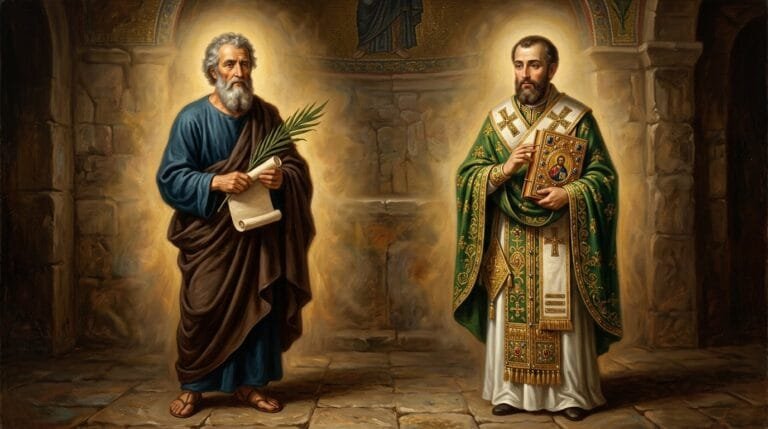
The question of what holiday is today or what is celebrated on August 24 guides millions of believers around the world who seek to align their daily lives with the liturgical calendar, saint commemorations, and historical Christian traditions. Today, August 24, the Christian Church marks a highly significant day: the Eastern Orthodox Church commemorates the Holy Hieromartyr Eutyches, a prominent first-century disciple of the Apostles John the Evangelist and Paul (according to the New, Revised Julian Calendar), while the Western Catholic Church celebrates the Feast of Saint Bartholomew the Apostle, one of the Twelve Apostles of Christ. Additionally, for Ukrainians worldwide, August 24 is the solemn and joyous Day of Independence, a national milestone that imbues this liturgical day with profound prayers for freedom, peace, sovereignty, and divine protection.
Understanding the liturgical calendar is not merely about tracking dates; it is an active spiritual journey. In the early Church, the daily commemoration of saints served as a compass for the faithful, keeping their minds focused on eternity amidst the challenges of the Roman Empire and subsequent historical trials. When we begin our morning with prayer, such as the “Our Father” or the “Hail Mary,” we surrender our concerns to God, allowing His grace to quiet our hearts and resolve our daily burdens, debs, and anxieties. Today’s saints teach us the value of steadfastness, spiritual wakefulness, and intellectual humility.
To cultivate this internal peace and guard your mind (nepsis) against the distractions of the world, we warmly invite you to explore the profound writings of the Eastern spiritual masters available on our portal, particularly the Ukrainian translation of the Philokalia, which provides timeless lessons on the prayer of the heart: Добротолюбіє в українському перекладі С. Матіяша.
Who was Hieromartyr Eutyches, Disciple of Saint John and Saint Paul?
Saint Eutyches (also known as Eutychos) was a prominent early Christian leader who lived during the first century and the early second century. Born in Sebaste, Palestine, he was not among the original Twelve Apostles or the Seventy, but he belongs to the legendary generation of the Apostolic Fathers—those who directly received the teachings of Christ from the mouths of His immediate disciples. Upon hearing the gospel, Eutyches became a dedicated disciple of Saint John the Evangelist (the Theologian). Later, he joined Saint Apostle Paul in his extensive missionary journeys, traveling through various regions of the Roman Empire to spread the light of Christ.
Because of his zealous preaching, Saint Eutyches faced severe persecution from pagan authorities. He was subjected to brutal tortures: he was imprisoned, starved, and scorched with red-hot iron. Historical accounts record that when Eutyches was thrown to wild beasts in the arena to be torn apart, the lions miraculously refused to harm him. Instead, one of the lions spoke in a human voice, proclaiming the greatness of the true God, which led to many pagans converting to Christianity on the spot. After enduring many other torments, Saint Eutyches was beheaded in the early second century, receiving the glorious crown of martyrdom. His life demonstrates the importance of apostolic succession and the living transmission of faith across generations.
Saint Bartholomew the Apostle: Nathanael and the Guileless Heart
In the Western liturgical tradition, August 24 is dedicated to the Feast of Saint Bartholomew the Apostle. In the Gospel of John, he is identified as Nathanael of Cana in Galilee. The story of his calling (John 1:45-51) is one of the most beautiful dialogues in the New Testament. When Philip eagerly told him, “We have found Him of whom Moses in the law, and also the prophets, wrote—Jesus of Nazareth, the son of Joseph,” Nathanael responded with skepticism: “Can anything good come out of Nazareth?” Philip did not argue; he simply said, “Come and see.”
As Jesus saw Nathanael approaching, He uttered a remarkable praise: “Behold, an Israelite indeed, in whom is no deceit!” Astonished, Nathanael asked, “How do You know me?” Jesus replied, “Before Philip called you, when you were under the fig tree, I saw you.” In ancient Jewish culture, sitting under a fig tree was a common metaphor for studying the Torah, meditating on the scriptures, and praying for the coming of the Messiah. Jesus’ words revealed to Nathanael that He knew the deepest, most sincere prayers of his heart, prompting Nathanael to confess immediately: “Rabbi, You are the Son of God! You are the King of Israel!”
Following the Ascension of Christ and the descent of the Holy Spirit at Pentecost, Saint Bartholomew embarked on a massive missionary journey. He preached the Gospel in Asia Minor, Mesopotamia, India, and Great Armenia. In Armenia, he performed countless miracles, healed the sick, and converted the royal family. However, pagan priests, enraged by the destruction of their idols, instigated the local ruler to arrest the apostle. Saint Bartholomew was subjected to an excruciatingly painful martyrdom: he was flayed alive and subsequently crucified head down in Albanopolis. His relics were later translated to Rome (Tiber Island) and Benevento, where they remain highly venerated to this day as sources of miraculous healing and grace.
The Spiritual Theology of Liberty and Ukraine’s Independence
August 24 also holds immense national and spiritual significance as the Day of Independence of Ukraine. From a Christian perspective, freedom is not a political construct but a sacred gift from the Creator. God created humanity in His image and likeness, endowed with free will and the capacity to choose truth, love, and righteousness. The Apostle Paul writes: “Now the Lord is the Spirit; and where the Spirit of the Lord is, there is liberty” (2 Corinthians 3:17). This teaching reminds us that physical and political independence are deeply connected to the freedom of the human soul from the slavery of sin and tyranny.
In times of warfare, severe hardship, and national tribulation, celebrating independence is not a matter of secular pride, but a call to deep, communal supplication. On this day, Christians lift their hearts in prayer for the defense of their homeland, the preservation of justice, and the restoration of a lasting, righteous peace. We pray for the brave soldiers who risk their lives on the battlefield to protect their families, and we ask God to cover them with His divine favor, granting them courage, health, and a safe return home.
Hesychastic Sobriety and the Prayer of the Heart
In our modern era, characterized by constant digital noise, mental fatigue, and anxiety, the teachings of the Christian East offer a sanctuary of silence. The practice of hesychasm (stillness) and nepsis (mental sobriety) teaches us to guard our hearts from harmful thoughts, fears, and temptations. By using a prayer rope (komboskini or chotki), believers can anchor their minds in the constant repetition of a short, powerful prayer, allowing the grace of God to flow into their daily lives.
On this day, we encourage you to pray this rhythmic prayer, reflecting on the courage of Saint Bartholomew and Saint Eutyches:
Lord Jesus Christ, Son of God, through the intercession of Saint Bartholomew and Hieromartyr Eutyches, have mercy on me, a sinner.
The Spiritual Laws of Life: Thanksgiving and the Commandments of Love
The Christian life is governed by immutable spiritual laws. The first of these is the law of thanksgiving. The Scripture instructs: “In everything give thanks; for this is the will of God in Christ Jesus for you” (1 Thessalonians 5:18). Cultivating a heart of gratitude—even in the midst of trials and uncertainty—shifts our focus from our limitations to God’s infinite abundance, opening the floodgates of heavenly blessings and spiritual peace.
The second spiritual law is found in the dual Commandments of Love: “You shall love the Lord your God with all your heart… and you shall love your neighbor as yourself” (Matthew 22:37-39). True love for one’s country and neighbors is not expressed in empty words, but in concrete actions of mercy: supporting those in need, offering shelter to refugees, comforting the brokenhearted, and praying for the release of our homeland from debts, war, and economic distress.
The Power of Communal Prayer
Communal prayer possesses an extraordinary power to bring down God’s grace and alter the course of history. Our Lord Jesus Christ promised: “For where two or three are gathered together in My name, I am there in the midst of them” (Matthew 18:20). When believers join their voices in unity, their collective faith becomes a powerful shield against evil and a source of profound comfort.
We warmly invite you to join our global prayer circle today. Please leave the names of your loved ones—both the living (for health, safety, and protection of soldiers) and the departed (for the repose of their souls)—in the comment section below. Our community will join in prayer for each and every name, presenting them before the Throne of Grace.
Real Testimonies of Divine Protection
The archives of our parish and synodal records contain remarkable testimonies of God’s miraculous intervention, especially on August 24. One moving account comes from a mother named Natalia from the Zhytomyr region. Her son, a soldier, was trapped in a heavy shelling during an intense battle on Independence Day. With a heart full of anguish, Natalia spent the entire day on her knees, crying out to Saint Bartholomew and Saint Eutyches for her son’s protection. The following day, her son called to say that when the artillery barrage was at its peak and all hope seemed lost, a profound, unexplainable calm enveloped him. He felt as though an invisible dome of light shielded him from the flying shrapnel. His entire unit managed to withdraw safely without a single casualty. This is a living testament that sincere faith and a mother’s prayer can defy the laws of nature and bring about miraculous salvation.
What NOT to Do on August 24: Customs and Signs
Christian tradition and folk customs encourage us to spend this day in peace, piety, and spiritual reflection, avoiding behaviors that disrupt our connection with God and neighbors:
Avoid conflicts, anger, and loud arguments. Engaging in disputes on this day was believed to invite long-term discord into the household and turn away divine blessings.
Do not wander alone into dense forests or swamps. Traditional folklore warned that deceptive spirits roam on this day, seeking to mislead travelers and cause unnecessary fear.
Refrain from complaining about your hardships or sinking into despair. Instead, practice gratitude for the blessings you have, which strengthens the soul and invites positive change.
Today, those named Maxim, Alexander, Mary, Macarius, Peter, and Eutyches celebrate their Name Days (Onomastics).
Powerful Prayers for August 24
Prayer to Hieromartyr Eutyches
O holy Hieromartyr Eutyches, faithful shepherd and intercessor for Christians! As a disciple of the Apostles, you guarded the faith untainted and willingly shed your blood for Christ. Look down with mercy upon us who fly to your protection. Ask the Lord of Mercy to grant peace to our nations, healing to the sick, comfort to the grieving, and steadfastness in faith to all believers. May your prayers shield us from all spiritual and physical harm. Amen.
Prayer to Saint Bartholomew the Apostle
O glorious Apostle Bartholomew, who with a guileless heart answered the call of the Savior and bore witness to His truth even unto a martyr’s death! Hear our humble petitions and present them before the Throne of the Almighty. Pray that He may grant us purity of mind, deliver us from deceit and sinful temptations, bless our families with health and harmony, and assist us in all our daily needs and hardships. Amen.
Prayer for Ukraine’s Independence and Peace
O Lord God of hosts, our Savior and Redeemer! We thank You for the gift of freedom and sovereignty on our land. We implore Your infinite mercy: protect our nation from all visible and invisible enemies. Grant wisdom to our leaders, courage and strength to our defenders on the front lines, healing to the wounded, and comfort to those who mourn. Let Your divine peace reign in our homes and hearts, and bless our people now and forevermore. Amen.
Download Free Prayer Booklet for August 24
For your spiritual convenience, we have compiled beautiful digital booklets containing the texts of these powerful prayers. They feature large, high-contrast fonts designed for comfortable reading on mobile devices or for printing at home:
Frequently Asked Questions (FAQ)
Who was Hieromartyr Eutyches?
He was an early Christian bishop of the first century, a disciple of Saint John the Evangelist and Saint Paul, who preached the Gospel extensively and died as a martyr for Christ.
Why is Saint Bartholomew celebrated on August 24?
In the Western liturgical calendar, August 24 is the Feast of Saint Bartholomew, commemorating his calling, his apostolic mission, and his glorious martyrdom in Armenia.
What are the main restrictions on August 24?
Believers are encouraged to avoid anger, arguments, and slandering others, to keep peace in families, and to refrain from despair, focusing instead on gratitude and prayer.
References (Canonical and Academic Sources)
1. The Martyrdom of Saint Bartholomew the Apostle — Historic hagiography, theological interpretations of the fig tree, and archaeological records of his relics in Rome and Benevento. Available on: ewtn.com.
2. Hieromartyr Eutyches, Disciple of Saint John — Liturgical resources and patristic records of his life, wild beasts miracle, and missionary journey on the Orthodox Church portal: pomisna.info.
3. The Christian Theology of Freedom and Statehood — Pastoral letters on sovereignty, patriotism, and the spiritual duty of defending the homeland. Available on: parafia.org.ua.