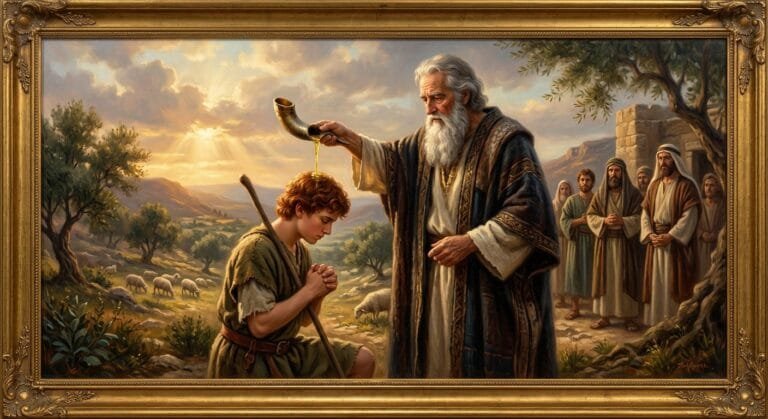
The daily query of what holiday is today or orthodox church calendar inspires millions of Christian households to align their days with sacred traditions, biblical meditations, and spiritual vigilance. Today, August 20, the Christian Church commemorates the Holy Prophet Samuel (Eastern tradition) and Saint Bernard of Clairvaux, Abbot and Doctor of the Church (Western tradition). This day is historically set apart for prayers of wisdom, family guidance, name days, and weather signs.
Understanding the liturgical cycle allows us to realize that every single day is sanctified by the memory of a specific saint or biblical milestone. For generations, Christian families have started their mornings with prayer, as it serves as the ultimate source of spiritual stability and peace of mind. By reciting the Lord’s Prayer (Our Father) and the Angelic Salutation (Hail Mary) at the start of our day, we entrust our intellect and our daily labor into God’s caring hands, protecting our souls from anger and despair. This synergy between quiet contemplation and active labor is the heart of Orthodox and Catholic spirituality, as beautifully documented by the holy fathers of the desert in the Philokalia.
To cultivate spiritual watchfulness (nepsis) and preserve peace of mind during trials, we warmly encourage you to read the cornerstone of Eastern Christian ascetical literature: the Philokalia (Dobrotolyubiye) in Ukrainian translation by S. Matiyash, where the desert fathers expound on the purification of the mind.
Who Was Saint Prophet Samuel and Saint Bernard of Clairvaux?
The Holy Prophet Samuel was the fifteenth and last judge of Israel, who lived about 1140 years before the Birth of Christ. He was born to a previously barren mother, Hannah, after her tearful and fervent prayers to God, and from his childhood, he was dedicated to the service of the Lord in the temple at Shiloh. Samuel prophesied for decades, calling the people to abandon idolatry and return to the faith of the One True God. It was he who, by divine command, anointed the first king of Israel, Saul, and later, the holy King David, author of the Psalms. The Prophet Samuel is a symbol of absolute fidelity to God and pastoral wisdom, and his intercession was always exceptionally powerful before the Lord.
The birth of Samuel is linked to a profound biblical narrative of intercessory faith. His mother, Hannah, who suffered for years from infertility and societal reproach, prayed fervently in the tabernacle of Shiloh, promising to dedicate her child to the service of God. Her prayer was so silent and focused that the High Priest Eli initially mistook her for being drunk. Upon giving birth to Samuel and fulfilling her sacred vow, she sang her famous hymn of thanksgiving (1 Samuel 2:1-10), which stands as the biblical and prophetic precursor to Mary’s Magnificat (“My soul magnifies the Lord”). This teaches every believer that a quiet, sincere cry of the heart is always heard by the Creator, turning human despair into a vessel of historical blessing.
The Holy Prophet Samuel also went down in biblical history as the founder of the unique “schools of prophets.” These were religious and educational brotherhoods where young disciples studied the Divine Law, practiced spiritual watchfulness, and learned the chanting of sacred psalms and united prayers. These dynamic brotherhoods served as the historical and theological prototype for future Christian monasteries. In these sacred spaces, believers withdrew from the distractions of the world to conquer fleshly temptations and devote their lives to the contemplation of God, reflecting the ascetical guidelines detailed in the Philokalia.
The birth of Samuel is linked to a profound biblical narrative of intercessory faith. His mother, Hannah, who suffered for years from infertility and societal reproach, prayed fervently in the tabernacle of Shiloh, promising to dedicate her child to the service of God. Her prayer was so silent and focused that the High Priest Eli initially mistook her for being drunk. Upon giving birth to Samuel and fulfilling her sacred vow, she sang her famous hymn of thanksgiving (1 Samuel 2:1-10), which stands as the biblical and prophetic precursor to Mary’s Magnificat (“My soul magnifies the Lord”). This teaches every believer that a quiet, sincere cry of the heart is always heard by the Creator, turning human despair into a vessel of historical blessing.
The Holy Prophet Samuel also went down in biblical history as the founder of the unique “schools of prophets.” These were religious and educational brotherhoods where young disciples studied the Divine Law, practiced spiritual watchfulness, and learned the chanting of sacred psalms and united prayers. These dynamic brotherhoods served as the historical and theological prototype for future Christian monasteries. In these sacred spaces, believers withdrew from the distractions of the world to conquer fleshly temptations and devote their lives to the contemplation of God, reflecting the ascetical guidelines detailed in the Philokalia.
The birth of Samuel is linked to a profound biblical narrative of intercessory faith. His mother, Hannah, who suffered for years from infertility and societal reproach, prayed fervently in the tabernacle of Shiloh, promising to dedicate her child to the service of God. Her prayer was so silent and focused that the High Priest Eli initially mistook her for being drunk. Upon giving birth to Samuel and fulfilling her sacred vow, she sang her famous hymn of thanksgiving (1 Samuel 2:1-10), which stands as the biblical and prophetic precursor to Mary’s Magnificat (“My soul magnifies the Lord”). This teaches every believer that a quiet, sincere cry of the heart is always heard by the Creator, turning human despair into a vessel of historical blessing.
The Holy Prophet Samuel also went down in biblical history as the founder of the unique “schools of prophets.” These were religious and educational brotherhoods where young disciples studied the Divine Law, practiced spiritual watchfulness, and learned the chanting of sacred psalms and united prayers. These dynamic brotherhoods served as the historical and theological prototype for future Christian monasteries. In these sacred spaces, believers withdrew from the distractions of the world to conquer fleshly temptations and devote their lives to the contemplation of God, reflecting the ascetical guidelines detailed in the Philokalia.
The Revised Julian Calendar was designed in 1923 by the brilliant Serbian astronomer and geophysicist Milutin Milanković during a pan-Orthodox synod in Constantinople. This calendar is scientifically recognized as the most accurate calendar in human history: it accumulates an error of one day only once every 43,500 years, whereas the Gregorian calendar (used by the Roman Catholic Church) errs by one day every 3,280 years. The OCU and UGCC transition to this new style corrected the astronomical discrepancy of the old Julian calendar, which currently stands at 13 days and continues to widen over time, restoring celebrations to their true astronomical and historical periods.
The Western Christian tradition on this day honors Saint Bernard of Clairvaux (1090–1153), a prominent French abbot, theologian, and Doctor of the Church. He reformed the Cistercian monastic order.
Saint Bernard was also a preeminent mystic whose commentaries on the biblical “Song of Songs” became a cornerstone of Christian mystical theology. He argued that the knowledge of God is accessible only through a burning, pure love that cleanses the heart of all self-interest. His extensive writings on the love of God influenced church architecture, music, and monastic reforms across Europe. He constantly reminded his monks that every basilica and monastic cell must primarily serve as a quiet haven for the soul to encounter the Living God in contemplation.
and founded the famous abbey of Clairvaux. Saint Bernard was highly renowned for his fiery eloquence, profound mariology, and ardent preaching of the love of Christ, becoming the spiritual leader of his era.The historical significance of Empress Helen cannot be overstated. When she arrived in Jerusalem in 326 AD, she was already in her late seventies. Despite her advanced age, she personally supervised the demolition of the pagan temple of Venus that Emperor Hadrian had constructed over the site of Golgotha. Beneath the foundations, her workers discovered three wooden crosses, along with the inscription plate (titulus) and the nails. To identify which cross belonged to Christ, Macarius, the Bishop of Jerusalem, suggested touching a terminally ill woman with each cross; when she was touched by the third cross, she was miraculously healed, proving it to be the True Cross. This event shaped Christian art and liturgy for centuries, establishing Saint Helen as a patron saint of archaeologists and seekers of truth.
Whose Name Day Is Today, August 20?
Today, name days are celebrated by: Samuel, Dementius, Athanasius, Alexander, Alexei, John. Congratulate your loved ones on their saint’s day, wishing them spiritual fortitude, peace of mind, and divine protection.
The Spiritual Legacy of Saint Bernard: Twelve Degrees of Humility and Pride
Saint Bernard of Clairvaux left the Church an invaluable ascetical treatise titled “On the Degrees of Humility and Pride” (De gradibus humilitatis et superbiae). In this profound mystical work, he analyzes the soul’s spiritual ascent to God and its corresponding descent into sin through pride. He outlines twelve distinct degrees of pride, starting from minor lapses of attention and leading to complete spiritual ruin:
- Curiosity: when a person begins to pry into the affairs of others without necessity, distracting their mind from their own soul.
- Lightness of Mind: when thoughts become unstable, wandering aimlessly in worldly anxieties and daydreams.
- Silly Mirth: seeking empty laughter and entertainment to drown out the internal warnings of conscience.
- Boasting: when a person begins to boast about their perceived virtues, material wealth, or social status.
- Singularity: the stubborn belief that one’s own opinions are superior to the experience and wisdom of the holy fathers.
- Arrogance: believing in one’s own righteousness and looking down with contempt on our neighbors.
- Presumption: taking on spiritual duties or trials without proper preparation or fear of God.
- Self-Justification: making excuses for one’s sins and refusing to admit mistakes before God.
- Hypocritical Confession: confessing sins only for public approval, without sincere contrition of heart.
- Rebellion: disobedience to spiritual directors, teachers, and the commandments of the Church.
- Freedom to Sin: the complete loss of the fear of God and a deliberate embrace of a sinful lifestyle.
- Habitual Sinning: when sin becomes second nature, leading the soul to complete spiritual death.
Resisting these steps of spiritual decline requires continuous vigilance of the mind (nepsis) and unceasing prayer of the heart, as expounded by the holy fathers of the desert in the Philokalia. True healing and recovery of the soul begin with the very first degree of humility — admitting our weakness and trusting entirely in God’s mercy.
Powerful Daily Prayers for August 20
Latin Originals of Daily Prayers (Pater Noster and Ave Maria) help us experience a deeper spiritual connection with the centuries-old liturgical heritage of the universal Church:
The Lord’s Prayer in Latin (Pater Noster):
“Pater noster, qui es in caelis, sanctificetur nomen tuum. Adveniat regnum tuum. Fiat voluntas tua, sicut in caelo et in terra. Panem nostrum quotidianum da nobis hodie. Et dimitte nobis debita nostra, sicut et nos dimittimus debitoribus nostris. Et ne nos inducas in tentationem, sed libera nos a malo. Amen.”
Angelic Salutation in Latin (Ave Maria):
“Ave, Maria, gratia plena, Dominus tecum. Benedicta tu in mulieribus, et benedictus fructus ventris tui, Iesus. Sancta Maria, Mater Dei, ora pro nobis peccatoribus, nunc et in hora mortis nostrae. Amen.”
3. Prayer to the Holy Prophet Samuel for Wisdom and Guidance
“O Holy Prophet of God, Samuel! You who from your childhood dedicated your heart to the service of the Lord and anointed righteous kings of Israel. Intercede before the Almighty that He may grant us and our children the spirit of wisdom, understanding, and obedience to His holy commandments, and protect our homes from all evil. Amen.”
Communal Prayer in the Comments: Unified in Faith
The combined prayer of believers has extraordinary power by Christ’s promise: “For where two or three are gathered in My name, there am I in the midst of them” (Matthew 18:20). We invite you to join our communal prayer circle:
- Leave the names of your loved ones in the comments section below, asking for Saint Samuel’s protection. For example: “Saint Samuel, protect my children Eugene and Athanasius from all visible and invisible harm today, and grant them wisdom.”
- Other Christians visiting pray.ee will see your request and reply with a sincere ‘Amen’, multiplying the prayer before the Throne of Grace.
Free Downloads of Prayer Booklets for August 20
For your convenience, we have prepared high-quality prayer booklets containing these prayers in large, readable fonts. You can download them free of charge for printing or offline reading on your mobile device:
Frequently Asked Questions (FAQ)
Who was the Prophet Samuel?
He was the last biblical judge of Israel, born to Hannah after her tearful prayers, and appointed by God to anoint Saul and David as kings.
What is the scientific benefit of the Revised Julian Calendar?
It is the most astronomically precise calendar in human history, designed by Serbian astronomer Milutin Milanković in 1923.
Whose name days are celebrated today, August 20?
Today, name days are celebrated by Samuel, Dementius, Athanasius, Alexander, Alexei, and John.
Sources and Canonical References
1. Orthodox Church of Ukraine Portal — Life of the Holy Prophet Samuel. Available at: pomisna.info.
2. Saint Archangel Michael Parish Portal — Liturgical calendars and histories of Old Testament righteous. Available at: parafia.org.ua.
3. Saint Bernard of Clairvaux and Theological Studies — Historical essays in CREDO Journal. Available at: credo.pro.