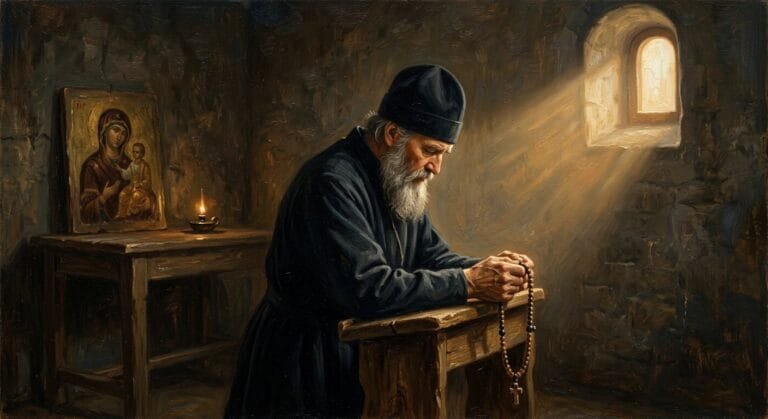
The profound search for What holiday is today or how to find immediate, unwavering spiritual protection in moments of sudden danger, severe distress, financial anxiety, and dark temptations is a daily concern for millions of believers worldwide. When life’s storms gather rapidly, when mental strength seems depleted, and when visible or invisible adversaries press hard from every side, Holy Scripture offers us a miraculous and incredibly potent spiritual shield — Psalm 70 (69). Its fiery opening words — «Make haste, O God, to deliver me; make haste to help me, O Lord» — represent the shortest, most dynamic, and most effective cry of the human soul for immediate Divine intervention. This comprehensive Orthodox and Catholic theological guide deeply explores the biblical and historical context of this psalm written by King David, reveals its massive liturgical significance through Patristic heritage and Athonite Hesychastic practice, explains the spiritual laws of gratitude and love, and includes authentic testimonies of miraculous salvation alongside the complete canonical prayer texts.
Understanding the liturgical calendar allows us to see how each day is consecrated to a specific saint or vital evangelical event. Our ancestors always began their days with heartfelt prayers, knowing that sincere dialogue with the Creator is the key to deep mental peace and invisible protection. When we recite the Lord’s Prayer (Our Father) or turn to God through the protective shield of Psalm 70 (69) in the morning before starting our labor or in the evening to quiet our thoughts, we place our intellect under Divine custody, calming our hearts against daily worries, career struggles, and material debts. On this day, we also recall the tremendous value of Patristic wisdom for the daily guarding of the mind against wandering thoughts.
1. Biblical and Theological Foundations of Psalm 70 (69)
In both Orthodox and Catholic biblical theology, Psalm 70 (numbered as Psalm 69 in the Septuagint and Latin Vulgate traditions) occupies a uniquely exalted position as a prayer of absolute concentration of faith and hope. Interestingly, this psalm is a nearly verbatim repetition of the final five verses of another major Davidic composition — Psalm 40 (verses 13-17 in Hebrew numbering). The deliberate extraction of these lines to form a distinct, independent psalm indicates a profound pastoral need within the ancient Church to possess a short, highly dynamic prayer designed for emergency situations, where there is no time for long liturgical readings, and immediate, urgent help is required.
Historically, this psalm was composed by King David during a period of extreme peril, likely when fleeing from the relentless, jealous persecutions of King Saul or during the tragic rebellion led by his own son, Absalom. David was trapped in a life-or-death situation, hunted by cunning adversaries who sought to destroy his soul and humiliate his royal name. The text directly reflects this high drama: «Let them be ashamed and confounded that seek after my soul: let them be turned backward, and put to confusion, that desire my hurt» (v. 2). However, the primary theological weight of the psalm shifts from the condemnation of enemies to absolute surrender to God’s sovereignty. By declaring, «But I am poor and needy: make haste unto me, O God: thou art my help and my deliverer; O Lord, make no tarrying» (v. 5), the psalmist demonstrates a state of perfect spiritual poverty — the very first beatitude proclaimed by Christ in His Sermon on the Mount (Matthew 5:3). It is a voluntary, humble confession of human helplessness without the Creator, which immediately activates the infinite power of Divine Providence.
Furthermore, Christian theologians have long recognized the prophetic, Christological dimension of Psalm 70. In the New Testament, David’s unjust sufferings are understood as a prefiguration of the Passion of our Lord Jesus Christ. As Christ hung upon the cross, Roman soldiers and Jewish leaders mocked Him, uttering words that strikingly echo verse 3 of this psalm: «Let them be turned back for a reward of their shame that say, Aha, aha!» (in the Latin Vulgate, «Euge, euge!»). Therefore, by praying Psalm 70, every believer mystically unites their personal suffering with the Gethsemane agony and Calvary sacrifice of the Savior, obtaining through His Resurrection the strength to overcome all physical and spiritual enemies.
2. Patristic Commentaries and Monastic Liturgy: Saint John Cassian’s Formula
Over the centuries, the Holy Fathers of the Church have deeply analyzed the spiritual power of Psalm 70. A truly monumental, foundational role was attributed to this text by Saint John Cassian (c. 360–435 AD) in his famous «Conferences» (specifically Conference 10, Chapter 10, which is entirely dedicated to prayer). Saint John Cassian, drawing directly from the oral traditions of the Desert Fathers of Egypt, presented the opening verse of this psalm — «Deus, in adjutorium meum intende; Domine, ad adjuvandum me festina» («O God, come to my assistance; O Lord, make haste to help me») — as the supreme, all-encompassing formula for unceasing prayer. He wrote that this short verse contains every single emotion that human nature can experience:
This verse has not been chosen from the whole body of Scripture without good reason. It expresses a burning supplication in times of danger, a humble confession of one’s own weakness, an unwavering faith in Divine assistance, and a deep trust in the Savior. When pride assails us, this verse reminds us that without God we are nothing. When sorrow or depression overcomes us, it restores hope of swift deliverance. When we are filled with joy, it warns us against self-sufficiency, urging us to ask God to preserve this state of grace.
Saint Benedict of Nursia, the father of Western monasticism, was heavily influenced by Saint John Cassian’s writings and made this verse the mandatory opening for every single hour of the monastic Divine Office (Liturgy of the Hours). Since the 6th century and up to the present day, every Roman Catholic liturgical hour (Matins, Lauds, Vespers, Compline) commences with this exact plea from Psalm 70. Saint Gregory the Great later extended this monastic custom to all the churches in Rome, emphasizing that communal liturgical prayer must always begin with a humble declaration of our absolute dependence on God’s mercy.
In the Eastern Christian tradition, Psalm 70 is an indispensable element of Great and Small Compline (the prayers read before sleep). It serves as a spiritual shield, cleansing the intellect from daytime temptations and guarding the soul against nocturnal illusions, nightmares, and demonic attacks. It is also widely practiced as a quick, silent prayer in moments of sudden panic, anxiety, financial distress, or severe physical illness, restoring Christ’s deep peace to the heart.
3. Spiritual Laws of Life: The Law of Gratitude and the Commandment of Love
The devotional life of a Christian operates under absolute spiritual laws. The first is the law of gratitude and spiritual abundance. The Apostle Paul instructs us: «In every thing give thanks: for this is the will of God in Christ Jesus concerning you» (1 Thess. 5:18). Expressing gratitude to God for our lives, our trials, and even our material struggles is the highest manifestation of faith. When we thank the Creator in the midst of a storm and simultaneously pray «Make haste, O God, to deliver me», we release the full power of His grace, which shields our families from danger, disease, and financial collapse. A sincere prayer must always be anchored in gratitude, converting the human heart into a vessel ready to receive Divine power.
The second spiritual law is the active fulfillment of the two Greatest Commandments: loving God with all our heart and loving our neighbor as ourselves (Matthew 22:37-39). True reliance on God requires us to show active mercy toward others, including our persecutors. When we pray for protection against adversaries using the words of Psalm 70, we must remember that our Christian warfare is not against flesh and blood, but against spiritual wickedness in high places (Ephesians 6:12). Therefore, when we pray for the confusion of our enemies, we are spiritually wishing for the defeat of their evil intentions, and for their eventual repentance and salvation. When we become channels of God’s sacrificial love on earth, our own lives are filled with His supernatural peace and family blessings.
4. Hesychastic Vigilance (Nepsis) and Prayer Rope Practice
In the Eastern Orthodox Hesychastic tradition and Athonite monastic practice, Psalm 70 provides the theological basis for the guarding of the mind (nepsis) and the purification of the heart from sinful thoughts (logismoi). When the intellect is attacked by anxious thoughts, fear of poverty, financial panic, or anger, Athonite elders advise against debating with these thoughts. Instead, one must immediately cut them off using a short, rhythmic prayer recited on the komboskini (prayer rope).
We present a short, rhythmic Hesychastic prayer for the prayer rope, derived from Psalm 70 and the traditional Jesus Prayer, to instantly calm the heart and repel spiritual attacks:
Lord Jesus Christ, Son of God, make haste to deliver me, guard me from the enemy, and have mercy on me, a sinner.
5. The Power of Communal Prayer: Matthew 18:20 and the Pray.ee Community
Communal prayer carries a magnificent, infallible promise of power from our Lord Himself: «For where two or three are gathered together in my name, there am I in the midst of them» (Matthew 18:20). When believers unite their hearts in sincere, collective intercession, the Holy Spirit descends to comfort the grieving, heal the sick, and restore peace to broken households.
Dear brothers and sisters! We cordially invite you to join our daily prayer circle on Pray.ee. If you are currently facing difficult times, suffering from injustice, legal battles, financial distress, debts, family conflicts, or sudden depression, please write your names (for health and protection) and your specific needs in the comments section below. Our large global Christian family on Pray.ee will remember you daily in our prayers before the Throne of Grace, asking for God’s urgent intervention, protection, and the transformation of your life for the better.
6. Real-Life Testimonies: Miraculous Salvation in Times of Peril
Parish and diocesan archives contain countless well-documented testimonies regarding the miraculous power of Psalm 70 during times of mortal danger. One such account comes from Andrew, an emergency rescue worker from Kyiv. During a severe storm, Andrew and his rescue team were dispatched to clear debris from a collapsed building. While they were working inside, a secondary collapse occurred, trapping Andrew beneath a heavy concrete slab. He was cut off from his team, surrounded by pitch darkness, with his oxygen supply rapidly depleting. Panic began to overwhelm him, and he felt his heart racing. Realizing that long prayers were impossible due to the lack of air, Andrew began to repeat the first verse of Psalm 70 continuously in his mind: «O God, make haste to deliver me! O Lord, make haste to help me!». He focused entirely on these words, feeling a deep, supernatural calm wash over his soul, slowing his breathing and conserving his oxygen. Outside, despite the chaos, his team felt a sudden, strong impulse to dig in a completely different direction than originally planned. Within twenty minutes, they breached the rubble and pulled Andrew out completely unharmed. Andrew firmly believes that this short, urgent prayer of the Cassian formula saved his life, proving that God hears the cry of the needy without delay.
7. Complete Canonical Text of Psalm 70 (69)
Text of the prayer in English (King James Version / Standard Liturgical):
1 Make haste, O God, to deliver me; make haste to help me, O Lord.
2 Let them be ashamed and confounded that seek after my soul: let them be turned backward, and put to confusion, that desire my hurt.
3 Let them be turned back for a reward of their shame that say, Aha, aha.
4 Let all those that seek thee rejoice and be glad in thee: and let such as love thy salvation say continually, Let God be magnified.
5 But I am poor and needy: make haste unto me, O God: thou art my help and my deliverer; O Lord, make no tarrying. Amen.
8. Frequently Asked Questions (FAQ)
In what specific needs should one pray Psalm 70?
Psalm 70 is ideal for emergency situations, sudden physical danger, panic attacks, extreme anxiety, spiritual warfare, legal injustices, and financial crises where immediate Divine help is needed.
Why does this psalm have double numbering (70 and 69)?
In the Greek Septuagint and Latin Vulgate, it is numbered as Psalm 69. In the Hebrew Masoretic Text and Protestant Bibles, it is Psalm 70. The text itself is completely identical in both versions.
What is the significance of the “Deus in adjutorium” in the Liturgy of the Hours?
It is the introductory versicle codified by Saint Benedict, used to cleanse the mind of distractions, ensuring that the liturgical prayer is offered with a focused, humble, and reverent heart.
9. Wikipedia-Style References and Canonical Sources
1. The Book of Psalms and Textual Exegesis — Comprehensive academic study of Psalm 70, its historical background, and biblical canon on Wikipedia: wikipedia.org (Psalm 70).
2. John Cassian’s Conferences on Prayer — Historical background of the “Deus in adjutorium” formula and its role in Desert Father spirituality: osb.org (Benedictine Monasticism).
3. Catholic Liturgy and the Divine Office — The role of Psalm 70’s opening verse in the Liturgy of the Hours on the EWTN portal: ewtn.com (Liturgy of the Hours).
4. Orthodox Hagiography and Hesychastic Practice — Patristic commentaries on guarding the intellect (nepsis) and repetitive prayer methods on the Orthodox Church portal: pomisna.info (Orthodox Spirituality).