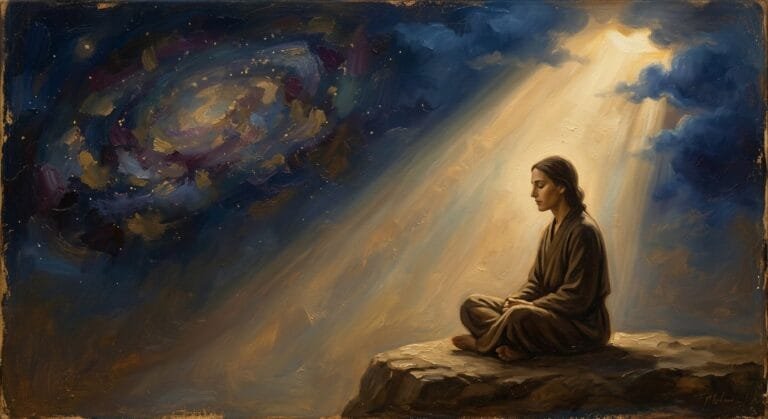
The eternal search for What holiday is today or how to find deep spiritual strength, physical healing, victory over debilitating loneliness, anxiety, and finding a clear direction in life daily occupies the hearts of millions of believers. When the world seems indifferent, and your soul is crushed by financial debts, severe illnesses, or family conflicts, Holy Scripture offers us an incredibly deep, sublime masterpiece of contemplative prayer — Psalm 139 (138). Its triumphant, comforting opening words — «O Lord, thou hast searched me, and known me» — represent the ultimate biblical declaration that the Creator of the universe knows us intimately, loves us unconditionally, and is beside us at every millisecond of our existence. This complete Orthodox and Catholic theological guide deeply explores the biblical and historical context of this psalm written by King David, reveals its massive liturgical role in the Divine Liturgy and the Liturgy of the Hours, explains the operation of spiritual laws of gratitude and love, describes the Hesychastic prayer rope practice of sobriety of mind (nepsis), and includes real-life testimonies of divine restoration alongside the complete canonical prayer texts.
Understanding the liturgical calendar allows us to see how each day is consecrated to a specific saint or vital evangelical event. Our ancestors always began their days with heartfelt praise and thanksgiving, knowing that sincere dialogue with the Creator is the key to deep mental peace and invisible protection. When we recite the Lord’s Prayer (Our Father) or turn to God through the protective shield of Psalm 139 (138) in the morning before starting our labor or in the evening to quiet our thoughts, we place our intellect under Divine custody, calming our hearts against daily worries, career struggles, and material debts. On this day, we also recall the tremendous value of Patristic wisdom for the daily guarding of the mind against wandering thoughts.
1. Biblical and Theological Foundations of Psalm 139 (138)
In both Orthodox and Catholic biblical theology, Psalm 139 (numbered as Psalm 138 in the Septuagint and Latin Vulgate traditions) occupies a uniquely exalted position as a prayer of absolute contemplation, celebrating God’s infinite omniscience and omnipresence. Composed by King David, this psalm is the fruit of a deep, personal meditation on how the Creator knows our every thought, our every word before it even reaches our tongue, and every physical movement of our body: «Thou knowest my downsitting and mine uprising, thou understandest my thought afar off…» (vv. 2-4). This is not the cold, forensic watchfulness of a judge, but the warm, protective gaze of a loving Father Who meticulously guards His children.
The second part of the psalm is dedicated to the magnificent truth of God’s omnipresence. David poetically describes the impossibility of any human attempt to flee from God’s presence: «Whither shall I go from thy spirit? or whither shall I flee from thy presence? If I ascend up into heaven, thou art there: if I make my bed in hell, behold, thou art there. If I take the wings of the morning, and dwell in the uttermost parts of the sea; Even there shall thy hand lead me, and thy right hand shall hold me» (vv. 7-10). The beautiful metaphor of «the wings of the morning» represents the speed of light, instantaneously traveling from east to west. The theological purpose of these lines is to liberate the human soul from the paralyzing fear of isolation and abandonment. Even in the deepest darkness of tribulation, sorrow, or physical illness, God is present, and His hand leads us: «Even the darkness hideth not from thee; but the night shineth as the day: the darkness and the light are both alike to thee» (v. 12).
The third theological pillar of the psalm is the mystical description of the human body being woven in the womb: «For thou hast possessed my reins: thou hast covered me in my mother’s womb. I will praise thee; for I am fearfully and wonderfully made…» (vv. 13-14). In these verses, Holy Scripture clearly proclaims the absolute sanctity of human life from the very moment of conception. A human being is never the product of random chance or chaos; every single cell, every trait, and every breath is the result of divine weaving (*divine tapestry*). Even when we were an unformed substance (*embryo*), God’s eyes beheld us, and all our days were already written in His book (v. 16). This realization restores a profound sense of self-worth, dignity, and permanently cures the soul of anxiety and feelings of insignificance.
2. Patristic Commentaries and Monastic Liturgy: The All-Seeing Eye of Love
Over the centuries, the Holy Fathers of the Church have deeply analyzed the spiritual power of Psalm 139. A truly monumental, foundational role was attributed to this text by Saint Augustine of Hippo in his famous «Expositions on the Psalms» (*Enarrationes in Psalmos*). Commenting on «thou hast searched me and known me», Saint Augustine explains that this search is an act of divine therapy. Augustine reads the psalm through the concept of the “Whole Christ” (*Totus Christus*), where the Head (Christ) and the Body (the Church) pray in unison. He notes: «God knows us infinitely better than we know ourselves. We must never try to hide our wounds from the Divine Physician, but rather expose them to His light in confession, for His knowledge is always redemptive, carrying forgiveness and physical restoration».
Saint John Chrysostom emphasized that the verse «I am fearfully and wonderfully made» should provoke constant awe and gratitude: «Look at the complexity of your body, how harmoniously your physical organs cooperate, and how your mind governs your movements. All of this is a masterpiece of God’s wisdom. Do not waste your life in frantic worries over money, status, or debts; rather, thank the Creator daily for making you so wonderfully for eternity». In both Western and Eastern monasticism, this psalm has been used for centuries to fight against spiritual sloth (*acedia*) and midnight panics, restoring the soul’s focus on God’s omnipresent protection.
In Eastern liturgical practice, Psalm 139 is part of Kathisma 19 and is read during the weekly cycle of the Psalter. In the Western Catholic tradition, Psalm 139 occupies a prominent place during Vespers (Evening Prayer) on Tuesday of Week IV of the Psalter. It is divided into two distinct sections due to its massive theological depth, inviting the faithful to slow down, meditate, and contemplate God’s intimate presence.
3. Spiritual Laws of Life: The Law of Gratitude and the Commandment of Love
The devotional life of a Christian operates under absolute spiritual laws. The first is the law of gratitude and spiritual abundance. The Apostle Paul instructs us: «In every thing give thanks: for this is the will of God in Christ Jesus concerning you» (1 Thess. 5:18). Expressing gratitude to God for our life, our body, and even our struggles is the highest manifestation of faith. When we thank the Creator in the midst of a storm, saying «I will praise Thee, for I am fearfully and wonderfully made», we release the full power of His grace, which shields our families from danger, disease, and financial collapse.
The second spiritual law is the active fulfillment of the Greatest Commandment of Love (Matthew 22:37-39). True reliance on God requires us to show active mercy toward others, recognizing that every human being is «wonderfully made» in the image of God. We cannot truly love Christ while holding onto resentment or anger against our neighbors. Knowing that God is present everywhere and dwells within our hearts commands us to show kindness, forgiveness, and charity to all, visit the sick, and support those in need. When we become channels of God’s sacrificial love on earth, our own lives are filled with His supernatural peace and family blessings.
4. Hesychastic Vigilance (Nepsis) and Prayer Rope Practice
In the Eastern Orthodox Hesychastic tradition and Athonite monastic practice, Psalm 139 provides the theological basis for the guarding of the mind (nepsis) and the purification of the heart from sinful thoughts of loneliness, abandonment, and anxiety. An Athonite elder once noted that gratitude is the ultimate weapon against clinical depression. By actively thanking God, the intellect (nous) is protected from the demonic suggestion of despair.
We present a short, rhythmic Hesychastic prayer for the prayer rope (komboskini), derived from Psalm 139 and the traditional Jesus Prayer, to instantly calm the heart and repel spiritual attacks:
Lord Jesus Christ, Son of God, You see me and know me, deliver me from anxiety and have mercy on me, a sinner.
5. The Power of Communal Prayer: Matthew 18:20 and the Pray.ee Community
Communal prayer carries a magnificent, infallible promise of power from our Lord Himself: «For where two or three are gathered together in my name, there am I in the midst of them» (Matthew 18:20). When believers unite their hearts in sincere, collective intercession and praise, the Holy Spirit descends to comfort the grieving, heal the sick, and restore peace to broken households.
Dear brothers and sisters! We cordially invite you to join our daily prayer circle on Pray.ee. If you are currently facing difficult times, suffering from physical illnesses, severe anxiety, financial distress, debts, family conflicts, or sudden depression, please write your names (for health, healing, and thanksgiving) and your specific needs in the comments section below. Our large global Christian family on Pray.ee will remember you daily in our prayers before the Throne of Grace, asking for God’s urgent intervention, physical healing, and the transformation of your life for the better.
6. Real-Life Testimonies: Delivered from the Dark Night of the Soul
Parish and diocesan archives contain countless well-documented testimonies regarding the miraculous power of Psalm 139 during times of severe mental distress, depression, and loss of meaning. One such account comes from Mary, a graphic designer from Kyiv. Following the tragic loss of her mother, Mary was thrust into a state of severe clinical depression and isolation. She felt completely abandoned, lost all interest in her work, suffered from debilitating insomnia, and began to experience terrifying panic attacks. Antidepressants provided no lasting relief. A parish priest advised her to commit to reading Psalm 139 daily as a form of spiritual therapy, focusing deeply on God’s absolute, personal knowledge of her life. Mary began to pray the psalm continuously, meditating on the verses: «Whither shall I go from Thy spirit? or whither shall I flee from Thy presence?». She felt a deep, warm presence of peace slowly flood her chest, and she realized she was never truly alone. Her insomnia and panic attacks vanished, and her heart was filled with a quiet, steady joy. Soon after, her life began to transform: she was offered an excellent creative position, and her family relationships were restored in peace. Mary firmly believes that Psalm 139 saved her life, proving that God’s omnipresent love is the ultimate cure for the broken heart.
7. Complete Canonical Text of Psalm 139 (138)
Text of the prayer in English (King James Version / Liturgical):
1 For the chief Musician, A Psalm of David. O Lord, thou hast searched me, and known me.
2 Thou knowest my downsitting and mine uprising, thou understandest my thought afar off.
3 Thou compassest my path and my lying down, and art acquainted with all my ways.
4 For there is not a word in my tongue, but, lo, O Lord, thou knowest it altogether.
5 Thou hast beset me behind and before, and laid thine hand upon me.
6 Such knowledge is too wonderful for me; it is high, I cannot attain unto it.
7 Whither shall I go from thy spirit? or whither shall I flee from thy presence?
8 If I ascend up into heaven, thou art there: if I make my bed in hell, behold, thou art there.
9 If I take the wings of the morning, and dwell in the uttermost parts of the sea;
10 Even there shall thy hand lead me, and thy right hand shall hold me.
11 If I say, Surely the darkness shall cover me; even the night shall be light about me.
12 Yea, the darkness hideth not from thee; but the night shineth as the day: the darkness and the light are both alike to thee.
13 For thou hast possessed my reins: thou hast covered me in my mother’s womb.
14 I will praise thee; for I am fearfully and wonderfully made: marvellous are thy works; and that my soul knoweth right well.
15 My substance was not hid from thee, when I was made in secret, and curiously wrought in the lowest parts of the earth.
16 Thine eyes did see my substance, yet being unperfect; and in thy book all my members were written, which in continuance were fashioned, when as yet there was none of them.
17 How precious also are thy thoughts unto me, O God! how great is the sum of them!
18 If I should count them, they are more in number than the sand: when I awake, I am still with thee.
19 Surely thou wilt slay the wicked, O God: depart from me therefore, ye bloody men.
20 For they speak against thee wickedly, and thine enemies take thy name in vain.
21 Do not I hate them, O Lord, that hate thee? and am not I grieved with those that rise up against thee?
22 I hate them with perfect hatred: I count them mine enemies.
23 Search me, O God, and know my heart: try me, and know my thoughts:
24 And see if there be any wicked way in me, and lead me in the way everlasting. Amen.
8. Frequently Asked Questions (FAQ)
In what specific needs should one pray Psalm 139?
Psalm 139 is ideal for overcoming severe loneliness, clinical depression, identity crises, panic attacks, and seeking divine direction when facing major life transitions.
Why does this psalm have double numbering (139 and 138)?
In the Greek Septuagint and Latin Vulgate, it is numbered as Psalm 138. In the Hebrew Masoretic Text and Protestant Bibles, it is Psalm 139. The text itself is completely identical in both versions.
What is the theological significance of the “embryo” description?
It provides a clear biblical proof of the absolute sanctity of human life from the moment of conception, proving that every human being is an intentional masterpiece of Divine Providence.
9. Wikipedia-Style References and Canonical Sources
1. The Book of Psalms and Textual Exegesis — Comprehensive academic study of Psalm 139, its historical background, and biblical canon on Wikipedia: wikipedia.org (Psalm 139).
2. Augustine’s Commentaries on the Psalms — Patristic analysis of “Totus Christus” and the healing gaze of God in Psalm 138 on the Holy See portal: vatican.va (Patristic Exegesis).
3. The Catholic Liturgy of the Hours — Daily texts of Vespers (Evening Prayer) and the role of contemplative psalms: credo.pro (Liturgy of the Hours).
4. Orthodox Hagiography and Hesychastic Practice — Patristic commentaries on guarding the intellect (nepsis) and repetitive prayer methods on the Orthodox Church portal: pomisna.info (Orthodox Spirituality).