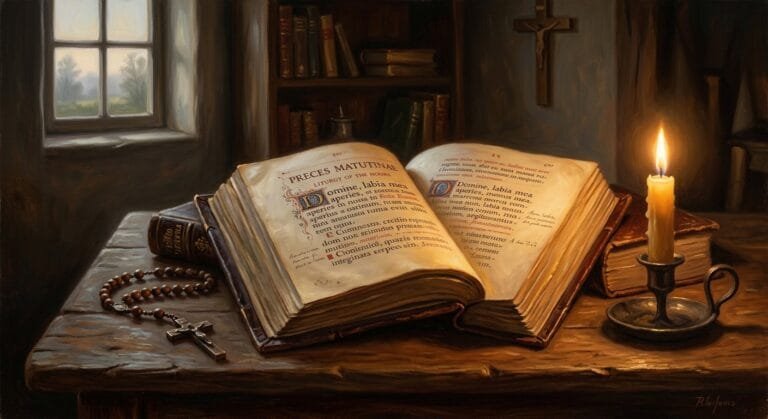
The establishment of a stable, sincere daily prayer rule is the ultimate foundation of Christian spiritual life. The profound search for What holiday is today or how to find deep physical and mental peace, overcome the heavy exhaustion of anxiety, protect one’s family from danger, and secure divine blessing upon daily labor is a constant concern for millions of believers worldwide. When we consecrate the intellect under God’s guidance at dawn and offer sincere contrition at dusk, we construct an unshakeable spiritual fortress. This complete Orthodox and Catholic guide deeply explores the canonical daily morning and evening prayers, reveals the theological importance of special canons for different life occasions, analyzes the liturgical rules of Eastern and Western churches (specifically the Liturgy of the Hours), explains the operation of spiritual laws of gratitude and love, describes the Hesychastic prayer rope practice of sobriety of mind (nepsis), and includes real-life testimonies of divine protection alongside the complete canonical prayer texts.
Understanding the liturgical calendar allows us to see how each day is consecrated to a specific saint or vital evangelical event. Our ancestors always began their days with heartfelt praise and thanksgiving, knowing that sincere dialogue with the Creator is the key to deep mental peace and invisible protection. When we recite the Lord’s Prayer (Our Father) or turn to God through the protective shield of our daily rule in the morning before starting our labor or in the evening to quiet our thoughts, we place our intellect under Divine custody, calming our hearts against daily worries, career struggles, and material debts. On this day, we also recall the tremendous value of Patristic wisdom for the daily guarding of the mind against wandering thoughts.
1. The Canonical Orthodox Morning and Evening Prayer Rule
In the Eastern Orthodox ascetic tradition, the morning and evening prayer rules are considered an indispensable daily duty for every Christian. These prayers were carefully composed by renowned Holy Fathers — Saint Basil the Great, Saint Macarius the Great, Saint John Chrysostom, and others — and structured in the Orthodox prayer book (prayer book) to gradually draw the human mind from worldly distractions into a state of deep concentration, sobriety, and repentance. Dedicating the first moments of the day to canonical prayers establishes a divine rhythm, guarding the soul against sinful thoughts and placing our families under God’s loving providence.
The Morning Prayer Rule traditionally begins with the Trisagion Prayers, invoking the Holy Spirit («Heavenly King»), the Holy Trinity, and the Lord’s Prayer («Our Father»). This is followed by the Symbol of Faith (the Creed), which defines our dogmatic boundaries, and Psalm 51 (Psalm 50 in Greek numbering), the great penitential cry for a clean heart. Believers then recite ten distinct morning prayers, petitioning for protection from temptations, strength for physical labor, and family blessings. A beautiful addition to the morning rule is the famous Morning Prayer of the Optina Elders, which teaches perfect surrender to God’s holy will, allowing the soul to face any unexpected event with absolute tranquility.
The Evening Prayer Rule (Prayers Before Sleep) is designed to cleanse the intellect on the threshold of rest, removing the heavy accumulation of daily stress, worries, and spiritual wounds. Following the initial Trisagion Prayers, the rule incorporates petitions to our Lord Jesus Christ, the Mother of God (Theotokos), and the Guardian Angel. A central element is the 24 short prayers of Saint John Chrysostom — one for each hour of the day and night — serving as an anchor of continuous spiritual vigilance. The evening rule concludes with a comprehensive confession of daily sins, committing our souls and loved ones into the merciful hands of the Creator before sleeping.
2. Morning and Evening Canons for Various Occasions
In addition to the daily rule, the Christian tradition encourages the practice of reading special canons (Canons). A canon is an intricate poetic and theological composition consisting of nine odes, designed to glorify Christ, the Virgin Mary, or the saints. Praying a canon individually is a highly recommended ascetical practice during times of severe trial, illness, family crisis, or as a key part of preparation before receiving the Sacrament of Holy Communion. Since canons are extremely long, we have published dedicated full-text posts for each, which you can access below.
There are three principal canons traditionally prayed during Eucharistic preparation, known as the “Three Canons” (or *Three Canons*):
- The Canon of Repentance to Our Lord Jesus Christ: Prayed in the evening or morning to break the bonds of pride, cultivate genuine contrition, and prepare the conscience before the Sacrament of Confession.
- The Supplicatory Canon to the Most Holy Theotokos (Paraklesis): Recited in moments of sudden danger, physical illness, severe financial distress, or family sorrow, seeking the maternal intercession of the Virgin Mary.
- The Canon to the Guardian Angel: Prayed to increase spiritual protection against demonic temptations, nightmares, and to obtain strength in overcoming harmful habits or addictions.
Systematically reading these canons deepens our familiarity with scriptural hagiography and theology, acting as a powerful safeguard against spiritual laziness and indifference, which are the root of all spiritual decay.
3. The Catholic Liturgical Sanctification of Time: The Liturgy of the Hours and Prayer Texts
In the Catholic Church, the daily sanctification of time is beautifully executed through the Liturgy of the Hours (*Oficio Divino*). This public, official prayer of the Church, rooted in ancient Jewish temple hours and developed by the early Desert Fathers, aims to consecrate the entire cycle of the day and night, turning every human hour into an act of perpetual praise rising before the Throne of Grace.
The Second Vatican Council identified Morning Prayer (**Lauds / Laudes**) and Evening Prayer (**Vespers / Vísperas**) as the “double hinge of the daily Office” (*double hinge of the daily Office*), commanding their faithful daily practice. Below, we provide the canonical prayer texts for each of these primary Hours.
Lauds (Morning Prayer)
Prayed at dawn to dedicate the first thoughts and physical energy of the day to God, celebrating the resurrection of Christ, the true Light of the world. It begins with the invocation:
O God, come to my assistance. O Lord, make haste to help me. Glory be to the Father, and to the Son, and to the Holy Spirit. As it was in the beginning, is now, and ever shall be, world without end. Amen. Alleluia!
The crown of Lauds is the Benedictus (Canticle of Zechariah), the canonical text of which is printed below:
Blessed be the Lord God of Israel; for he hath visited and redeemed his people, And hath raised up an horn of salvation for us in the house of his servant David; As he spake by the mouth of his holy prophets, which have been since the world began: That we should be saved from our enemies, and from the hand of all that hate us; To perform the mercy promised to our fathers, and to remember his holy covenant; The oath which he sware to our father Abraham, That he would grant unto us, that we being delivered out of the hand of our enemies might serve him without fear, In holiness and righteousness before him, all the days of our life. Amen.
Vespers (Evening Prayer)
Recited at sunset as a sacrifice of thanksgiving for the day’s accomplishments. It features the beautiful Magnificat (Canticle of Mary), the original text of which is printed below:
My soul doth magnify the Lord, and my spirit hath rejoiced in God my Saviour. For he hath regarded the low estate of his handmaiden: for, behold, from henceforth all generations shall call me blessed. For he that is mighty hath done to me great things; and holy is his name. And his mercy is on them that fear him from generation to generation. He hath shewed strength with his arm; he hath scattered the proud in the imagination of their hearts. He hath put down the mighty from their seats, and exalted them of low degree. He hath filled the hungry with good things; and the rich he hath sent empty away. He hath holpen his servant Israel, in remembrance of his mercy; As he spake to our fathers, to Abraham, and to his seed for ever. Glory be to the Father, and to the Son, and to the Holy Spirit. Amen.
Compline (Night Prayer)
Recited immediately before going to sleep. It features the Nunc Dimittis (Canticle of Simeon):
Lord, now lettest thou thy servant depart in peace, according to thy word: For mine eyes have seen thy salvation, Which thou hast prepared before the face of all people; A light to lighten the Gentiles, and the glory of thy people Israel. Glory be to the Father, and to the Son, and to the Holy Spirit. Amen.
And it concludes with the beautiful, ancient Marian Antiphon, the Salve Regina (Hail Holy Queen):
Hail, holy Queen, Mother of Mercy, hail, our life, our sweetness and our hope. To thee do we cry, poor banished children of Eve; to thee do we send up our sighs, mourning and weeping in this vale of tears. Turn then, most gracious advocate, thine eyes of mercy toward us; and after this our exile, show unto us the blessed fruit of thy womb, Jesus. O clement, o loving, o sweet Virgin Mary! Pray for us, o holy Mother of God, that we may be made worthy of the promises of Christ. Amen.
4. Spiritual Laws of Daily Adoration: Gratitude and Love
The daily devotional life of a Christian operates under absolute spiritual laws. The first is the law of gratitude and spiritual abundance. The Apostle Paul instructs us: «In every thing give thanks: for this is the will of God in Christ Jesus concerning you» (1 Thess. 5:18). Offering heartfelt thanks to God at dawn for the gift of a new day, and at night for all the trials and lessons of the day, is the highest expression of faith. When we thank the Creator in the midst of life’s struggles, we release the full power of His grace, which shields our families from danger, disease, and financial collapse.
The second law is the active fulfillment of the Greatest Commandment of Love (Matthew 22:37-39). This requires complete reconciliation and forgiveness of our neighbors before going to sleep. The Apostle Paul warns: «Let not the sun go down upon your wrath» (Ephesians 4:26). Holding onto resentment, anger, or bitterness over the night hours severely damages our spiritual shield, exposing the mind to nightmares, fear, and spiritual attacks. By actively forgiving our enemies during our evening prayers, we align our hearts with Christ’s Gethsemane and Calvary mercy, ensuring that we sleep in perfect divine peace and awaken with restored physical strength.
5. Hesychastic Spiritual Sobriety (Nepsis) at Dawn and Dusk
In the Eastern Orthodox Hesychastic tradition and Athonite monastic practice, the morning and evening hours are times of heightened spiritual vigilance (nepsis). At dawn, before the mind is flooded with worldly anxieties, and at night, before sleep, monastics utilize the prayer rope (komboskini) to anchor the intellect inside the heart, cutting off all distracting thoughts and anxieties about career or material debts.
We present a short, rhythmic Hesychastic prayer for the prayer rope, designed to guard the intellect at the beginning and end of the day:
Lord Jesus Christ, Son of God, bless my day (or: guard my sleep), purify my heart and have mercy on me, a sinner.
6. The Power of Communal Prayer: Matthew 18:20 and the Pray.ee Community
Communal prayer carries an extraordinary, infallible promise of power from Jesus: «For where two or three are gathered together in my name, there am I in the midst of them» (Matthew 18:20). When believers unite their hearts in daily morning and evening intercession, the Holy Spirit descends to comfort the grieving, heal the sick, and restore peace to troubled households.
Dear brothers and sisters! We cordially invite you to join our daily morning and evening prayer circle on Pray.ee. If you are currently facing difficult times, suffering from physical illnesses, legal battles, financial distress, debts, or family conflicts, please write your names (for health and protection) and your specific needs in the comments section below. Our global Christian family on Pray.ee will remember you daily in our prayers at dawn and dusk, asking for God’s urgent intervention, protection, and family blessings.
7. Real-Life Testimonies of the Power of Daily Prayer
Parish and diocesan archives contain countless well-documented testimonies regarding the miraculous power of committing to a stable morning and evening prayer rule. One such account comes from Sarah, a schoolteacher from Boston. Following a painful divorce and sudden job loss, she was thrust into a state of severe clinical depression and insomnia. She was plagued by constant panic attacks, unable to sleep without medication, and awoke each morning with an overwhelming sense of dread. A visiting parish priest advised her to commit to a strict daily rule: reciting the Optina Elders prayer and morning thanksgiving prayers at dawn, and praying Psalm 4, evening prayers, and the Canon to the Guardian Angel before sleep. Sarah began to execute this rule faithfully. At first, concentration was difficult, but gradually the prayers began to bring a deep, supernatural calm. Within two weeks, she was able to sleep peacefully without medication, her panic attacks vanished, and her heart was filled with a steady, quiet joy. Soon after, her life began to transform: she was offered a new teaching position, and her family relationships were restored in peace. Sarah testifies that establishing a daily morning and evening rule restored her physical and spiritual vitality, showing her the path to life.
8. Key Morning and Evening Prayer Texts
The Morning Prayer of the Optina Elders:
O Lord, grant that I may meet all that the coming day brings with spiritual tranquility. Grant that I may fully surrender myself to Your holy will. At every hour of this day, direct and support me in all things. Whatsoever news I may receive during the day, teach me to accept it with a calm soul and the firm conviction that it is Your holy will. In all my words and actions, guide my thoughts and feelings. In all unexpected occurrences, do not let me forget that all is sent by You. Teach me to act directly and wisely with every member of my family, troubling or upsetting no one. O Lord, grant me the strength to bear the fatigue of the coming day and all its events. Guide my will and teach me to pray, to believe, to hope, to suffer, to forgive, and to love. Amen.
The Evening Prayer of Saint Macarius the Great:
O Eternal God and King of all creation, Who hast vouchsafed me to reach this hour, forgive me the sins which I have committed this day in deed, word, and thought; and cleanse, O Lord, my humble soul from all defilement of flesh and spirit. And grant me, O Lord, to pass this night in peace, that rising from my humble bed I may glorify Your holy name all the days of my life, and conquer all physical and spiritual enemies that rise against me. Deliver me, O Lord, from vain thoughts that defile me, and from evil desires. For Yours is the kingdom, the power, and the glory, of the Father, and of the Son, and of the Holy Spirit, now and ever, and unto ages of ages. Amen.
9. Frequently Asked Questions (FAQ)
What should I do if I am too exhausted to pray the full morning or evening rule?
In cases of extreme fatigue, it is better to pray a few prayers with deep attention and sincerity of heart than to mechanically read the entire rule without feeling. You may use a shortened rule: the Lord’s Prayer, the Optina Elders prayer in the morning, and the confession of daily sins before sleeping.
What is the main difference between the Orthodox prayer rule and the Catholic Liturgy of the Hours?
The Orthodox prayer rule consists of fixed, personal prayers written by the Holy Fathers and printed in the prayer book. The Catholic Liturgy of the Hours is the official liturgical service of the Church, built entirely on psalms, scripture readings, and responses designed to sanctify each hour of the day.
When is the best time to recite the evening prayers?
Evening prayers should be recited immediately before going to sleep (standing before your icons, not in bed). After completing these prayers, it is best to avoid eating, watching television, or browsing the internet, maintaining silence and spiritual peace.
10. Wikipedia-Style References and Canonical Sources
1. Liturgies.net Orthodox Library — Complete liturgical texts and prayer structures of the Canon of Repentance: liturgies.net (Canon of Repentance).
2. St. John the Baptist Orthodox Church (DFW) — Spiritual guides, hagiographical profiles, and readings of the repentance rule: stjohndfw.info (Orthodox Prayers).
3. Pomog.org Liturgical Repository — Complete canonical English translations and rubrics of the Orthodox Canons: pomog.org (Canon of Repentance).
4. Ascension Press Daily Devotions — The Liturgy of the Hours (Lauds and Vespers) in modern Catholic life: ascensionpress.com (Liturgy of the Hours).
5. The Wikipedia Canonical Hours Guide — Theological origin and structural evolution of Christian daily rule: wikipedia.org (Liturgy of the Hours).