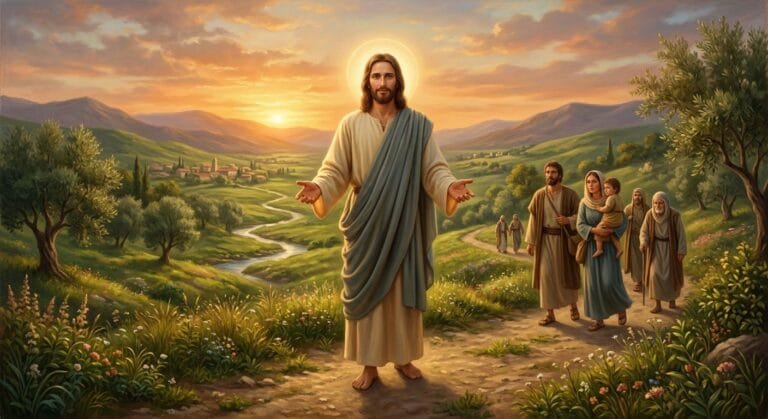
In our modern, high-pressure society characterized by relentless information noise, economic challenges, personal struggles, and severe anxieties, millions of believers ask themselves daily: what holiday is today in the church calendar, and how can one find an unshakeable fortress of inner calm, overcome panic attacks, and eliminate fear of the future. Man often feels completely helpless in the face of sudden life crises and mounting financial debts. In such demanding times, the Holy Scriptures offer us a sovereign remedy for the troubled soul. One of the most famous and powerful Bible verses providing absolute consolation is Matthew 11:28-30: «Come to Me, all you who labor and are heavy laden, and I will give you rest…». These divine words are not merely a call for physical inactivity, but a profound spiritual law of interior silence (hesychia) and life transformation that offers unique relief under Christ’s yoke. This comprehensive guide deeply explores the biblical and historical context of these words, reveals patristic commentaries, reveals the hesychastic practice of guarding the mind (nepsis), and contains powerful canonical prayers.
Understanding the liturgical calendar helps us realize that every single day is dedicated to a specific saint or an essential salvation event. Our ancestors always began their days with prayer, as it is the key to mental rest. When we pray the Our Father or turn to God through Matthew 11:28-30 in the morning before starting work or in the evening to quiet the soul, we place our mind under God’s protection, calming the heart before future life cares and debts. Today we also recall the great importance of patristic wisdom for the daily sobering of our mind.
To strengthen your faith and mental sobriety (nepsis) amidst daily temptations, we highly recommend reading the Eastern Christian treasury of spirituality: The Philokalia translated into Ukrainian by S. Matiyash, where you will find invaluable patristic teachings on how to acquire inner peace.
1. Biblical and Theological Analysis: «Labor and Heavy Laden»
To deeply understand our Lord’s invitation, it is necessary to examine who He is addressing. In the original Greek text, the words Kopiōntes (those who work hard, tired from physical or spiritual labor) and Pefortismenoi (those carrying a heavy external load) are used. In the context of Jewish society at the time, «heavy laden» referred to the ordinary people on whom religious leaders (Pharisees) imposed unbearable legalistic burdens and human traditions, while not being willing to lift a finger to help them.
In a broader spiritual sense, «labor and heavy laden» refers to every human being carrying the heavy burden of their own sins, anxieties, fears, debts, and life worries. A sinful world promises freedom, but in reality imposes a heavy yoke of constant anxiety, envy, vanity, and passions. Christ offers an alternative: to come to Him and discard this deadly load at the foot of His Cross.
2. What is «Christ’s Yoke» (Zygos) and «Light Burden»?
Many readers are surprised that Christ, while promising rest, calls us to take a new yoke: «Take My yoke upon you…». In the original, the word Zygos (yoke) is used. A yoke is a wooden beam placed on the necks of two oxen so they can pull a plow together, synchronously. In biblical times, the yoke was a symbol of subjection, service, and discipleship.
When Christ says «Take My yoke upon you», He reveals a wonderful truth: we are called to step into the same yoke with the Son of God himself! This means we no longer pull the heavy plow of our life problems alone. The main weight is carried by the Almighty Christ, who walks beside us. The yoke becomes «easy» (in Greek *chrestos* — good, gracious, pleasant), and the burden «light», because it is supported by divine omnipotence. Christ’s yoke is the law of love, faith, and grace, which delivers us from the slavery of passions.
3. Exposition of the Church Fathers: St. John Chrysostom and St. Augustine
The Holy Fathers of the Church have deeply studied the mystical meaning of Matthew 11:28-30. The great saint John Chrysostom emphasized that Christ does not call us to idleness, but to a transfiguration of labor: «He does not simply deliver us from trials, but grants us new strength and unshakeable security. His yoke does not press on the neck, but adorns it. His commandments are easy, because love makes any effort pleasant. He who abides in Christ rejoices amidst sorrows and keeps absolute peace of mind in the midst of adversity».
The great Doctor of the Western Church, Saint Augustine of Hippo, interpreted Christ’s yoke as the law of mercy that opposes the iron law of sin. In his sermons, he wrote: «Any other burden weighs you down and presses you to the earth, but the burden of Christ is wings for a bird. A bird carries its wings, and though they have weight, it is the wings that lift it into the sky. So it is with Christ’s yoke: it seems like a burden, but it lifts your soul above earthly vanity, financial panic, and the fear of death». Augustine taught that true rest of the soul (*requies*) is achieved only through humble imitation of Christ’s gentleness.
4. Spiritual Laws of Life: The Law of Gratitude and the Commandment of Love
A peaceful Christian life is built upon fundamental spiritual laws. The first is the law of gratitude, stated in the Holy Bible: «In everything give thanks; for this is the will of God in Christ Jesus for you» (1 Thessalonians 5:18). Complaining, envy, and panic over debts are signs of carrying the world’s yoke. We can counteract this only through the law of gratitude. When we thank God sincerely in the midst of any trial or illness, our mind is delivered from the dictatorship of panic, and the heart is filled with a divine peace that casts out fear.
The second law is the obedience to the Commandments of Love: «You shall love the Lord your God with all your heart… You shall love your neighbor as yourself» (Matthew 22:37-39). A renewed mind no longer seeks selfish self-justification, but strives to serve others. Love for neighbor is the best marker that our mind has been transfigured. When we share our bread with the poor, forgive those who offend us, support the sick, and pray for our enemies, we testify before the entire universe that we have become disciples of Jesus Christ.
5. Hesychastic Mental Sobriety (Nepsis) and Peace of Heart
In Eastern hesychasm, Christ’s call «Learn from Me, for I am gentle and lowly in heart, and you will find rest for your souls» is the foundation for guarding the mind (nepsis) and holy quietude of mind (hesychia). Quietude of mind is achieved through the daily practice of the Jesus Prayer on a prayer rope (komboskini).
The believer sits in silence, closes their eyes, concentrates attention in the heart, and slowly repeats a short prayer rhythmically with their breathing. This helps to completely hand over our mind to God’s protection, calming the heart before daily duties and debts.
Practical Hesychastic Exercise for Peace in Prayer:
- Hold a prayer rope (komboskini/chotki) of 50 or 100 knots in your hands.
- On the inhale, slowly whisper: «Lord Jesus Christ», realizing His loving presence in your heart.
- On the exhale, slowly whisper: «Calm my soul» or «Have mercy on me», letting go of all stress, panic thoughts, and fear of the future.
- Repeat this exercise for 15-20 minutes in the morning and evening. This rhythmic, focused prayer is the best spiritual shield against anxiety, panic attacks, and depression.
6. The Power of Communal Prayer and Prayer Requests in the Comments
Communal prayer of Christians possesses a unique divine power to work miracles. Lord Jesus Christ revealed this mystery, saying: «For where two or three are gathered together in My name, I am there in the midst of them» (Matthew 18:20). When we unite in sincere intercession, the grace of the Holy Spirit descends, healing sickness, breaking the bonds of financial debts, and bringing peace to troubled hearts.
We invite you to become an active part of our large prayer family. In the comments section of this article, please leave your names or the names of your loved ones, children, sick relatives, or anyone currently facing severe trials, sickness, or financial distress. All readers of our portal and spiritual guides will offer sincere communal prayers before the Throne of the Almighty for each name left here.
7. Real Testimony of Divine Protection and Rest
From the archival records of our parish community, we share a beautiful testimony from Paul, who received miraculous deliverance from heavy anxiety and debts through practicing Christ’s words in Matthew 11:28-30.
A few years ago, I found myself in a state of total life collapse. My business went bankrupt, and I was left with massive debts that collectors demanded immediately. I was receiving dozens of threatening calls every day, could not sleep, and suffered from constant terror, rapid heartbeat, and severe panic attacks. I reached the brink of despair and clinical depression, seeing no way out. My mind was frantically searching for solutions day and night, but things only grew worse. One day, an old priest at a monastery told me: Stop, stop running and panicking. Every day, sit before the icon, take a prayer rope, and simply read Matthew 11:28-30 and repeat: Come to Me, all you who labor and are heavy laden, and I will give you rest. I started doing this. At first, my thoughts were scattered, but I kept returning to the words of silence. Within a week, I felt an incredible peace that words cannot describe. The fear completely vanished. I simply entrusted the entire situation to God. And miracles began to happen on their own: the creditors unexpectedly agreed to restructure my debt without any interest, I was offered a new job, and my health was fully restored. I learned from my own experience that when we yield everything to Christ, He resolves our problems in the most perfect way.
8. Powerful Canonical Prayers for Mental Peace
For daily reading in the morning or evening when you are overwhelmed by anxiety and doubts, we recommend using these canonical prayers translated from liturgical sources.
Prayer for Calming the Heart and Deliverance from Fear
Lord Jesus Christ, Son of God, You are the peace of our hearts and the silence amidst the storms of life. Look down upon my troubled soul, suffering from anxiety, panic, and worldly cares. You commanded us: Come to Me, all you who labor and are heavy laden, and I will give you rest. I bow my heart before Your holy will. Take away from my mind all fear of the future, calm my trembling heart, and cast out all despair and doubt. Grant me the grace of Your interior silence, so that I may clearly see Your love and protection. Envelop my loved ones in Your divine shield, deliver us from debts, enemies, and sickness, and teach us to always rely on Your holy providence. For Yours is the kingdom, and the power, and the glory, of the Father, and of the Son, and of the Holy Spirit, now and ever, and unto ages of ages. Amen.
9. Frequently Asked Questions (FAQ)
What is the literal meaning of «zygos» in the original text?
This Greek word means «yoke» — a wooden beam connecting two oxen for shared labor. Spiritually, it means stepping into the same yoke with Christ, who supports the entire weight of our burdens.
Why is Christ’s yoke called easy and light?
//Because it is based on the law of love and grace, rather than unbearable legalistic requirements, and Christ himself helps us to bear our life loads.
How does hesychastic prayer rope practice assist in mental renewal?
It purifies the mind of all distracting thoughts through the continuous focused Jesus Prayer on a prayer rope, which physiologically and spiritually calms the nervous system.
10. Canonical and Academic Sources
1. The Gospel of Matthew: Liturgical Text and Meaning — Theological resources of the Church: pomisna.info (Gospel of Matthew).
2. Patristic Commentaries on the Gospels — Academic database of early church father interpretations: parafia.org.ua (Patristics).
3. Saint Augustine: Exposition of Christ’s Invitation — Catholic theological analysis and commentaries: credo.pro (St. Augustine).
4. Hesychasm and the Athonite Tradition of Sobriety — Academic study on Eastern Christian spirituality and prayer rope practice: osb.org (Monastic Hesychasm).