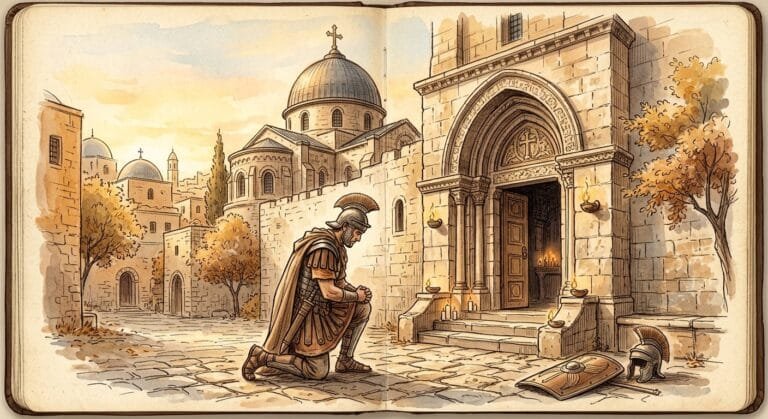
Every day, millions of believers ask the same important question: what holiday is today according to the Church’s liturgical calendar, what folk signs and customs belong to the day, what is forbidden, whose name day is being celebrated, and which prayer will help us ask God for protection and peace of heart. September 13 is an extraordinarily rich day in the Orthodox calendar (new style / revised Julian calendar): the Church recalls the Dedication (Renewal) of the Church of the Resurrection of Christ in Jerusalem — the very Church of the Holy Sepulchre, consecrated in 335 — commemorates the Hieromartyr Cornelius the Centurion, the first Gentile received into the Church by the Apostle Peter, and begins the forefeast of the Exaltation of the Precious Cross of the Lord, the great feast that comes the very next day. In folk tradition the day was called Cornelius Day, and because of its special, Paschal-flavored service in honor of the dedication of the church, it was also called Autumn Pascha. This complete guide tells the history of the feast in detail, recounts the life of Cornelius the Centurion, gathers the folk customs of the day, and provides the canonical prayer texts.
Understanding the liturgical year helps us realize that every day is dedicated to a particular saint or a key Gospel event. Our ancestors always began the day with prayer, because prayer is the key to peace of soul. When we say the Lord’s Prayer or turn to Hieromartyr Cornelius in the morning before work, or in the evening to quiet our hearts, we place our minds under God’s care and calm our souls before life’s worries and anxieties. And September 13 is also the last full day before the Exaltation of the Cross of the Lord, so the Church invites us to enter the great feast with a purified heart and quiet prayer.
To strengthen your faith and your spiritual watchfulness (nepsis) amid daily temptations, we invite you to the spiritual treasury of the Christian East: the Philokalia (Dobrotolyubiye), where you will find the priceless counsel of the Holy Fathers on prayer and on how to gain peace of soul.
The Orthodox Feast of September 13: The Dedication of the Church of the Resurrection of Christ in Jerusalem
The History of the Feast: From a Pagan Shrine to the Church of the Holy Sepulchre
The feast of the dedication (that is, the consecration) of the Church of the Resurrection of Christ in Jerusalem was established in memory of the completion and consecration of the church that the whole world now knows as the Church of the Holy Sepulchre. At the beginning of the fourth century, the holy Equal-to-the-Apostles Empress Helena, mother of Emperor Constantine the Great, came to Jerusalem to find the burial place of Jesus Christ and the Life-Giving Cross. The pagan temple built over the holy place was torn down, and beneath it the shrines hidden from the world for three centuries were revealed [1][2].
By the emperor’s command, a majestic church complex was raised on this site, embracing Golgotha, the Sepulchre of the Lord, and the place where the Cross was found. The construction lasted almost ten years, and on September 13, 335, the newly built church was solemnly consecrated. The participants of the first Council of Tyre, who were then gathered in Palestine, were invited to the consecration. In memory of this event the Church established the feast, which every year precedes the Exaltation of the Cross of the Lord [2].
Why This Day Is Called Autumn Pascha
In liturgical practice, the feast of the dedication of the Church of the Resurrection is celebrated with particular solemnity: the churches sing hymns of a Paschal character, and the day itself was nicknamed Autumn Pascha among the people [1]. This is a deeply meaningful symbol: the church built around the empty Sepulchre of the Lord reminds us that the Resurrection of Christ is the very heart of our faith. And for each of us, this day is an invitation to our own “renewal”: to let go of evil thoughts and old offenses, to do more good, to help our neighbors. It was believed that any help given to the needy on this day brings prosperity into the home [1].
Hieromartyr Cornelius the Centurion: The First Gentile in the Church
On the same day, September 13, the Church commemorates the Hieromartyr Cornelius the Centurion — the figure of the tenth chapter of the Acts of the Apostles, without whom the history of Christianity cannot be imagined. Cornelius lived in the first century in Caesarea of Palestine and was a Roman centurion — the commander of a hundred soldiers. Though he was a Gentile, his life was remarkably devout: Scripture calls him “a devout man and one who feared God,” who with all his household feared God, gave many alms, and prayed to God always (Acts 10:1–2) [1][5].
One day an angel appeared to Cornelius and commanded him to send for the Apostle Peter in Joppa. Meanwhile, Peter himself received the famous vision of the sheet with all kinds of animals and the voice: “What God has made clean, do not call common” (Acts 10:15). Coming to Cornelius, Peter preached to him about Jesus Christ — and the Holy Spirit fell on the centurion and on all who heard the word. Cornelius and his household were baptized, and he became the first Gentile received into the Church without the requirement of keeping the Jewish law — the event that opened the doors of the Gospel to all nations [1][5].
Later, the Apostle Peter ordained Cornelius as bishop. According to tradition, once when Cornelius was praying in a pagan temple, the temple began to crumble — and after this many inhabitants of the city turned to Christ. The hieromartyr Cornelius ended his journey with a martyr’s death for the confession of the faith. He is prayed to for the conversion of those still far from God, for an openness of heart to the Gospel, and for courage to confess the faith before the powers of this world [1][5].
The Forefeast of the Exaltation of the Cross and a Day of Remembrance
September 13 is also the forefeast of the Exaltation of the Precious and Life-Giving Cross of the Lord. Tomorrow, September 14, comes one of the greatest of the Twelve Feasts of the church year, and on the eve of the solemnity the churches sing special prayers dedicated to the coming feast, for the Church always prepares the faithful for great events in this way [1][6].
It is important that the Saturday and Sunday before the Exaltation have a special memorial character: on these days special readings and panikhidas (memorial services) for departed Christians are served. In 2026, September 13 falls on a Sunday — so it is the Sunday before the Exaltation, with special readings from the Apostle and the Gospel. Let us remember our departed loved ones on this day with a warm prayer: submit notes for the memorial service, light a candle, pray at home — “In blessed sleep eternal rest give, O Lord, to Your servants.”
The Folk Feast of Cornelius Day: Traditions, Signs, and Prohibitions
In the folk calendar, September 13 is known as Cornelius Day — in honor of Saint Cornelius the Centurion. Since the feast of the dedication of the church was called Autumn Pascha, the day was considered bright and special, with a considerable list of folk rules [1][3].
What Is Forbidden on September 13
Folk tradition preserved these prohibitions for Cornelius Day [3][4]:
- Do not swear or quarrel — this was believed to invite negativity into the home.
- Do not refuse the needy — almsgiving is especially valued on this day.
- Avoid heavy physical labor, especially in the evening and in the dark hours.
- Do not hold noisy revelries and festivities — according to belief, this leads to tears.
- Cleaning is forbidden on this day — you might “sweep away” happiness and prosperity.
- Avoid making large purchases — they will turn out badly.
- It is not advised to propose marriage or hold a wedding — folk wisdom says such a marriage will be unhappy.
- Do not sleep on two pillows — according to belief, you might “steal away” your own luck in love.
- Do not carry out the trash after sunset — you might “carry away” prosperity from the home.
- Do not practice divination, look over your left shoulder in moments of fear, or gamble [3][6].
Weather Signs for September 13
On Cornelius Day people observed nature carefully [1][3][6]:
- A clear day — the autumn will be warm.
- A red moon — strong winds are coming.
- Rooks flying away — expect an early winter and snow.
- Hens beginning to molt — the winter will be mild.
- Cranes flying low — the winter will be mild; flying high — it will be harsh.
- Hearing the cry of cranes — rain is coming.
- A young moon — a rich harvest of cranberries.
An old belief is also interesting: cranberries must not be gathered before September 13 — it was thought this might bring misfortune, while rowan berries, by contrast, were left untouched on this day so as not to disturb the birds before their departure [6].
Name days on September 13 are celebrated by Cornelius, Valerian, Gordian, Elias, Leontius, Lucian, Peter, Julian, Gennadius, Nicholas, Alexander, Vladimir, and Arcadius [3]. If your loved ones bear these names, greet them on their name day with a warm prayer and a kind word.
The Spiritual Laws of This Day: Renewal and Open Doors
The law of renewal. The feast of the dedication of the Church of the Resurrection is a reminder that God renews all that He touches: the old temple on the site of Christ’s Sepulchre became a church of the Resurrection, and the empty tomb became a fountain of life. He is ready to do the same with our hearts: to tear down in them the old “shrine” of sin and build up a temple of prayer. Autumn Pascha invites each of us: let go of evil thoughts, forgive the one who offended you, do a good deed — and you will see how the soul is renewed.
The law of open doors. The story of Cornelius the Centurion is the story of how God opens doors where there seemed to be none. Cornelius was a Gentile, a “stranger” to the promises — yet his sincere prayer and his almsgiving were heard by God before he himself understood where they were leading. The Commandment of Love knows no exceptions: “You shall love the Lord your God with all your heart” (Matthew 22:37) — and the Lord Himself finds the way to every heart, as He found the way of Peter to the house of Cornelius.
The law of preparation. The forefeast teaches us not to come to what is great with empty hands. Tomorrow is the Exaltation of the Cross, and today the Church prepares us for it with prayer, fasting, and silence. Let us too prepare our hearts: through reconciliation with our neighbors, sincere confession, and quiet evening prayer.
Hesychast Watchfulness: Nepsis and Prayer with the Chotki
Cornelius the Centurion is one of the finest biblical examples of what the hesychast Fathers taught. The Acts of the Apostles say of him simply: he “prayed to God always” (Acts 10:2). It is precisely this constancy — prayer that becomes the breath of the soul — that the Fathers called watchfulness (nepsis): the state in which the mind keeps watch before God, like a sentinel on a tower, and cuts off thoughts before they enter the heart [7]. Saint Hesychios of Jerusalem taught that a heart accustomed to calling on the name of Jesus becomes like a temple — and then in it takes place a true “renewal,” like the one we celebrate today.
The practice of prayer with the chotki on this day is simple:
- Take your prayer rope and say 33 knots of the Jesus Prayer: “Lord Jesus Christ, Son of God, have mercy on me, a sinner.”
- At the end, add a prayer for the departed, remembering the memorial character of the day: “Rest, O Lord, the souls of Your departed servants, and forgive them all offenses voluntary and involuntary.”
- Another round of the prayer rope may be dedicated to preparation for the Exaltation, praying: “We worship Your Cross, O Master, and Your holy Resurrection we glorify.”
- Finish with thanksgiving: “Glory to You, O our God, glory to You.”
The short prayer of the day. “Lord Jesus Christ, as You opened the door of faith to the centurion Cornelius, so open the door of Your mercy for me and for my house. Renew my heart as the church of Your Resurrection was renewed, and make me ready to meet worthily the feast of Your Life-Giving Cross. Amen.”
Common Prayer on September 13 on Pray.ee
Prayer offered together has a special power: “For where two or three are gathered together in My name, there am I in the midst of them” (Matthew 18:20). On this day, when the Church recalls the dedication of the Church of the Resurrection and prays for the departed, gather your family for common evening prayer — even for a few minutes, even with one Lord’s Prayer and the remembrance of your departed loved ones.
On our prayer portal Pray.ee you can leave your prayer intention in the comments under this article — and the community of believers will pray for you and your loved ones, living and departed. Write down whom or what you ask prayer for: for health, for the rest of souls, for the protection of soldiers, for peace in the family. Do not remain alone with your cares — in common prayer we bear one another’s burdens.
A Living Testimony: A Story from Our Community
“My father lived all his life far from the church, like Cornelius before Peter came — an honest, hardworking man, but unbaptized. I prayed for him every day with the Jesus Prayer on the chotki for about ten years. Last year, on the very eve of the Exaltation, he himself asked me to take him to church. And this year, on Cornelius Day, he received baptism — at seventy-eight years old. The priest smiled and said: ‘You see, God found His way to him, just as to Cornelius.’ Now I know for certain: prayer is never late.” — Mariana, Ternopil.
If you have your own testimony of God’s help, share it in the comments on Pray.ee. Your word may be the very spark of faith that someone is missing right now.
The Canonical Prayers of September 13
Troparion of the Dedication of the Church of the Resurrection, Tone 4
Blessed are You, O Christ our God, who made the fishermen all-wise by sending upon them the Holy Spirit, and by them drew the whole world into Your net, O Lover of mankind, glory to You. (According to the Typikon, this troparion is sung on the feast of the dedication of the Church of the Resurrection.)
Kontakion to Hieromartyr Cornelius the Centurion, Tone 4
As the firstfruits of the Gentiles, the Church received you, glorious Cornelius; for having believed the word of Peter, you showed yourself the first among the Gentiles to receive grace, and therefore God glorified you. Pray for us who honor your memory.
Prayer to Hieromartyr Cornelius (for home use)
O holy hieromartyr Cornelius, you were the first of the Gentiles to enter the Church of Christ, opened to you by prayer and almsgiving. Entreat Christ God for us: grant us a heart open to the Gospel, hands generous in almsgiving, and courage to confess the faith before men. Obtain for us forgiveness of sins and great mercy. Amen.
Prayer for the Departed (for the day of remembrance)
Rest, O Lord, the souls of Your departed servants, our parents and brethren, and of all Orthodox Christians, and forgive them all offenses voluntary and involuntary, and grant them Your heavenly Kingdom, the communion of Your eternal blessings, and life everlasting. Amen.
FAQ: Frequently Asked Questions About September 13
What church feast falls on September 13, 2026?
According to the new style (revised Julian calendar), the Orthodox Church on September 13 recalls the dedication (consecration) of the Church of the Resurrection of Christ in Jerusalem (the year 335), commemorates Hieromartyr Cornelius the Centurion, and begins the forefeast of the Exaltation of the Precious Cross of the Lord. In 2026 this day falls on the Sunday before the Exaltation, with special readings and a memorial character.
Who was Cornelius the Centurion?
A Roman centurion of Caesarea of Palestine in the first century, a “devout and God-fearing” Gentile who, at an angel’s command, invited the Apostle Peter. Having heard the preaching, he and his household were baptized and received the Holy Spirit — Cornelius became the first Gentile in the Church. Later the Apostle Peter ordained him bishop.
Why is September 13 called Autumn Pascha?
Because of the feast of the dedication of the Church of the Resurrection of Christ in Jerusalem: the service of this day has a solemn, Paschal flavor, and the church itself was built around the Sepulchre of the Lord — the place of the Resurrection. Therefore the day symbolizes renewal: one should let go of evil, do good, and help one’s neighbors.
What is forbidden on September 13 according to folk customs?
One must not swear or quarrel, refuse the needy, work hard, hold noisy revelries, clean the house, make large purchases, propose marriage or hold a wedding, sleep on two pillows, carry out the trash after sunset, practice divination, or gamble.
Who celebrates name days on September 13?
Name days are celebrated by Cornelius, Valerian, Gordian, Elias, Leontius, Lucian, Peter, Julian, Gennadius, Nicholas, Alexander, Vladimir, and Arcadius.
Sources
- [1] Rivne 1 — September 13: folk feasts and traditions, Cornelius Day (in Ukrainian)
- [2] Wikipedia — Dedication of the Church of the Resurrection of Christ in Jerusalem (in Ukrainian)
- [3] RBC-Ukraine — The feast of September 13: prohibitions, signs and name days (in Ukrainian)
- [4] Telegraf — September 13: what is forbidden today (in Ukrainian)
- [5] Inseinin — What feast is September 13: the church feast of Saint Cornelius (in Ukrainian)
- [6] Glavcom — September 13: what holiday is today, signs and prohibitions (in Ukrainian)
- [7] The Philokalia (Dobrotolyubiye) — Pray.ee