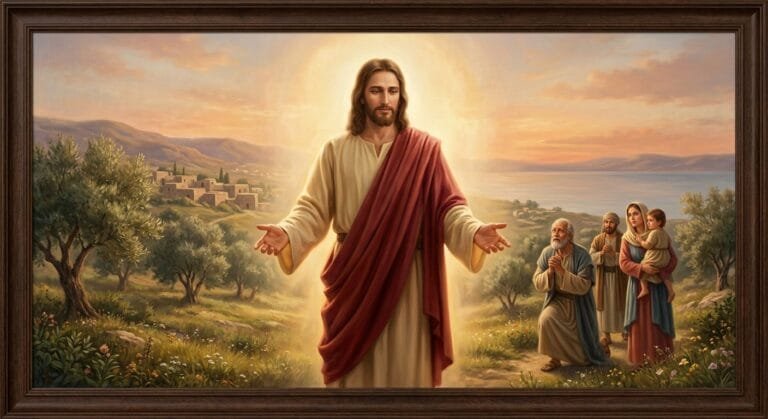
In our modern, high-pressure world characterized by relentless noise, personal demands, and constant anxieties, millions of people suffer daily from chronic fatigue, emotional burnout, severe panic attacks, and clinical depression. Many find themselves searching for answers: what holiday is today in the church calendar that brings solace to the wounded heart, and how can one utilize a powerful prayer to escape from long-term despair. When a person is weighted down by financial debts, physical illnesses, and sudden life crises, the human intellect is naturally vulnerable to panic. However, Lord Jesus Christ stretches out His pre-precious hands to each of us and gives the most comforting covenant promise in human history, recorded in the Gospel of Matthew 11:28-30: «Come to Me, all you who labor and are heavy laden, and I will give you rest…». These divine words are not merely a religious obligation, but a profound spiritual law of interior peace and rest that God grants to every trusting soul. This comprehensive Orthodox and Catholic guide deeply explores the biblical and linguistic context of this crucial verse, reveals the commentaries of the Church Fathers, describes the hesychastic practice of quietude, and contains powerful canonical prayers.
Understanding the liturgical calendar helps us realize that every single day is dedicated to a specific saint or an essential salvation event. Our ancestors always began their days with prayer, as it is the key to mental rest. When we pray the Our Father or request the powerful intercession of Christ according to Matthew 11:28-30 in the morning before starting work or in the evening to quiet the soul, we place our mind under God’s protection, calming the heart before future life cares and debts. Today we also recall the great importance of patristic wisdom for the daily sobering of our mind.
To strengthen your faith and mental sobriety (nepsis) amidst daily temptations, we highly recommend reading the Eastern Christian treasury of spirituality: The Philokalia translated into Ukrainian by S. Matiyash, where you will find invaluable patristic teachings on how to acquire inner peace.
1. Biblical and Philological Analysis: Kopiontes, Pefortismenoi, and Zygos
The original Greek text of the Gospel of Matthew employs deep, precise terms that fully clarify the condition of modern man and the nature of Christ’s aid. The first word is Kopiontes (копіонтес), translated as «those who labor» or «weary». It describes a person who has completely exhausted their internal resources due to heavy physical or mental labor, running in a relentless circle of daily vanity, and experiencing absolute emotional emptiness. This is the exhaustion from one’s own frantic efforts to save themselves on their own.
The second word is Pefortismenoi (пефортісменоі), translated as «heavy laden». It describes those upon whom a heavy, crushing load has been placed from the outside. In the evangelical context, Christ was addressing people loaded down with hundreds of formal, artificial religious rules and laws imposed upon them by the scribes and Pharisees. In a broader sense, it represents the heavy weight of sins, grudges, financial debts, panic fears, and the high expectations of society that a person is forced to carry on their shoulders.
Christ proposes an incredible solution: «Take My yoke (Zygos) upon you… for My yoke is easy, and My burden (Fortion) is light». A yoke was a wooden implement that joined two oxen together in a harness for plowing fields. When the Savior calls us to take His yoke, He proposes a unique synergy (cooperation): «Get into the same harness with Me. The largest and heaviest portion of your life’s burden, I will carry Myself, while you only have to bear the light part — trust, love, and obedience to My commandments». Christ’s yoke is easy (beneficial, gracious) because it does not suppress, but rather gives wings to the soul.
2. Exposition of the Church Fathers: St. John Chrysostom and St. Augustine of Hippo
For centuries, the great Church Fathers have unfolded the wonderful depth of this gospel invitation. The great universal teacher, Saint John Chrysostom, in his homilies on Matthew, wrote: «Christ does not call those who are strong and healthy, but addresses the weary, the sinful, and the weak. He says: come to Me, I will not demand heavy accounts, I will not place new burdens on you, but I will give you rest. Why is His yoke easy? Because it lightens our conscience, cleanses us from sins that drag the soul down, and fills the heart with the joy of the Holy Spirit. Fear not His yoke, for it is a yoke of love».
The great Doctor of the Western Church, Saint Augustine of Hippo, interpreted the «rest» promised by Christ as the return of the soul to its true Creator. His famous phrase: *«You have made us for Yourself, O Lord, and our heart is restless until it rests in You»* is the best commentary on this gospel passage. Augustine emphasized that the «light burden» of Christ is the law of love (Agape): «The burden of love is not heavy. It is like the wings of a bird: they have a certain weight, but it is because of them that the bird rises high into the sky. In the same way, the commandments of Christ elevate our soul above earthly vanity».
3. Spiritual Laws of Life: The Law of Gratitude and the Commandment of Love
Living in divine peace is impossible without obeying fundamental spiritual laws. The first is the law of gratitude, stated by the Apostle Paul: «In everything give thanks; for this is the will of God in Christ Jesus for you» (1 Thessalonians 5:18). A sinful world teaches a person to complain constantly, panic over debts, envy others, and live in perpetual worry. We can counteract this only through the law of gratitude. When we thank God sincerely in the midst of any trial or illness, our mind is delivered from the dictatorship of panic, and the heart is filled with a divine peace that casts out fear.
The second law is the obedience to the Commandments of Love: «You shall love the Lord your God with all your heart… You shall love your neighbor as yourself» (Matthew 22:37-39). Christ calls us to learn from Him, «for He is gentle and lowly in heart». Gentleness and humility are the expressions of true Christian love. When we humble our egoism, forgive those who offend us, show mercy to the poor, and pray for the salvation of every soul, we get into the same harness with Lord Jesus Christ, and His unshakeable love carries us above earthly storms.
4. Hesychastic Path to Quietude: Hesychia and Nepsis
In the Eastern monastic tradition, particularly on Mount Athos, the call «Come to Me… and I will give you rest» serves as the biblical foundation for the practice of hesychia — sacred quietude and silence of the mind. Athonite elders teach that the adversary constantly tries to keep man in a state of worry, panic, and anxiety, because God cannot dwell in a troubled heart. Quietude of mind is achieved through the daily practice of the Jesus Prayer on a prayer rope (komboskini or chotki).
The believer sits in silence, closes their eyes, concentrates attention in the heart, and slowly repeats a short prayer rhythmically with their breathing. This helps to completely hand over our mind to God’s protection, calming the heart before daily duties and debts.
Practical Exercise of Hesychastic Quietude in Prayer:
- Hold a prayer rope (komboskini/chotki) of 50 or 100 knots in your hands.
- On the inhale, slowly and deeply whisper: «Lord Jesus Christ», realizing His loving presence in your heart.
- On the exhale, slowly whisper: «Grant rest to my soul» or «Have mercy on me», letting go of all stress, panic thoughts, and fear of the future.
- Repeat this exercise for 15-20 minutes in the morning and evening. This rhythmic, focused prayer is the best spiritual shield against anxiety, panic attacks, and depression.
5. The Power of Communal Prayer and Prayer Requests in the Comments
Communal prayer of Christians possesses a unique divine power to work miracles. Lord Jesus Christ revealed this mystery, saying: «For where two or three are gathered together in My name, I am there in the midst of them» (Matthew 18:20). When we unite in sincere intercession, the grace of the Holy Spirit descends, healing sickness, breaking the bonds of financial debts, and bringing peace to troubled hearts.
We invite you to become an active part of our large prayer family. In the comments section of this article, please leave the names of your loved ones, children, soldiers, or anyone currently facing severe trials, sickness, or financial distress. All readers of our website and our pastoral guides will offer their communal prayers for each name left here.
6. Authentic Testimony of Divine Peace and Restoration
From the archival records of our parish community, we share a beautiful testimony from Ann, who found deep interior peace and a miraculous resolution to her trials through active faith in Christ’s word.
A few years ago, I found myself in a state of total life collapse. My daughter fell seriously ill, my husband’s business went bankrupt, and we were left with massive debts to banks, which threatened to take our apartment. I was in complete despair, unable to sleep due to constant panic attacks and fear of the future. I reached the brink of despair and clinical depression, seeing no way out. One day, an old priest told me: Stop, stop running and panicking. Every day, sit before the icon of the Savior, take a prayer rope, and simply read Matthew 11:28-30 and repeat: Come to me, Lord, and calm my soul. I started doing this. At first, my thoughts were scattered, but I kept returning to the words of silence. Within a week, I felt an incredible peace that words cannot describe. The fear completely vanished. I simply entrusted the entire situation to God. And miracles began to happen on their own: the creditors unexpectedly agreed to restructure my debt without interest, my husband was offered a new good job, and my daughter went on the mend and fully recovered. I learned from my own experience that when we yield everything to God, He resolves our problems in the most perfect way.
7. Powerful Canonical Prayers for Interior Peace and Relief from Anxiety
For daily reading in the morning or evening when you are overwhelmed by anxiety, panic, and daily cares, we recommend using these canonical prayers.
Prayer for Calming the Heart and Deliverance from Fear
Lord Jesus Christ, Son of God, You are the peace of our hearts and the silence amidst the storms of life. Look down upon my troubled soul, suffering from anxiety, panic, and worldly cares. You commanded us: Come to Me, all you who labor and are heavy laden, and I will give you rest. I bow my heart before Your holy will and take Your easy yoke upon myself. Take away from my mind all fear of the future, calm my trembling heart, and cast out all despair and doubt. Grant me the grace of Your interior silence, so that I may clearly see Your love and protection. Envelop my loved ones in Your divine shield, deliver us from debts, enemies, and sickness, and teach us to always rely on Your holy providence. For Yours is the kingdom, and the power, and the glory, of the Father, and of the Son, and of the Holy Spirit, now and ever, and unto ages of ages. Amen.
8. Frequently Asked Questions (FAQ)
What is the spiritual meaning of the «Yoke» of Christ?
A yoke is a farming implement joining oxen. Spiritually, taking Christ’s yoke means entering into a partnership (synergy) with Him, allowing Him to carry the heaviest part of our struggles.
What is the difference between those who labor and those who are heavy laden?
Those who labor (weary) are exhausted from their own self-reliance, while the heavy laden carry external burdens like legalism, debts, guilt, and expectations.
How does hesychastic prayer help with chronic stress?
It purifies the mind of panic thoughts through focused breathing and repetition of Jesus’ name, which physiologically and spiritually relaxes the nervous system.
9. Canonical and Academic Sources
1. The Gospel of Matthew: Text and Meaning — Official portals of the Orthodox Church of Ukraine: pomisna.info (Holy Scriptures).
2. Patristic Commentaries on the Gospel of Matthew — Academic database of the Fathers of the Church: parafia.org.ua (Comentarios Patrísticos).
3. Saint Augustine: Exposition of the Gospel and Grace — Portales teológicos católicos: credo.pro (San Agustín).
4. The tradition of sobriety and quietude of the Mount Athos — Estudios sobre la oración contemplativa: osb.org (Hesicasmo).