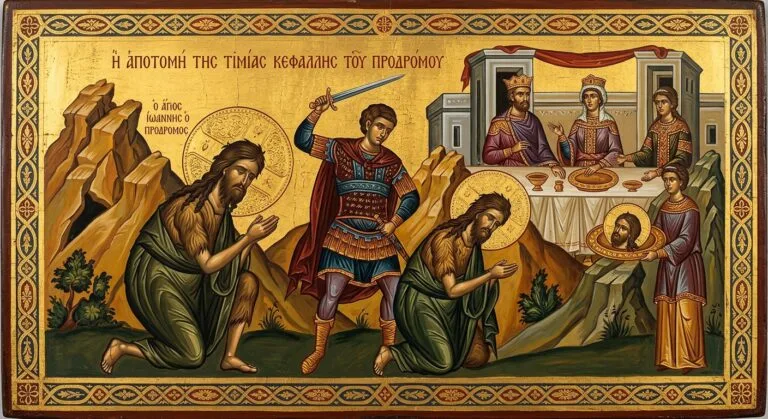
Every single day, millions of Christians around the globe actively ask the essential question: what holiday is today according to the official church calendar, what name days are being celebrated, what traditional folk signs are associated with this day, and how can one employ a powerful, heartfelt prayer to obtain divine protection, health, and peace for the household. Dedicating our first thoughts of the day to the Savior acts as an anchor of quietude, enabling the soul to rise above the daily ocean of worries, anxieties, and debts. August 29 is an incredibly important, solemn, and highly revered day in both the Eastern Orthodox and Roman Catholic liturgical calendars. On this day, the entire Christian world commemorates the Beheading of Saint John the Baptist (the Precursor and Prophet). This comprehensive guide deeply explores the biblical hagiography of this great saint, the cultural and folk traditions, clarifies popular misconceptions, examines fundamental spiritual laws of grace, and contains powerful canonical prayers.
Understanding the structure of the liturgical year helps us grasp that each day is dedicated to a specific saint or an essential salvation event. Our ancestors always began their days with prayer, as it is the key to mental rest. When we recite the Our Father or request the powerful intercession of the Baptist John in the morning before starting work or in the evening to quiet the soul, we establish a robust spiritual boundary around our family. Today we also recall the immense value of patristic wisdom for the daily sobering of our mind.
To strengthen your faith and mental sobriety (nepsis) amidst daily temptations, we highly recommend reading the Eastern Christian treasury of spirituality: The Philokalia translated into Ukrainian by S. Matiyash, where you will find invaluable patristic teachings on how to acquire inner peace.
1. Biblical and Theological Understanding: The Martyrdom of John the Baptist
The Beheading of Saint John the Baptist is a major feast day with deep scriptural and theological foundations. John the Baptist was the greatest among those born of women, the «voice of one crying in the wilderness», who paved the way for the Messiah and had the unique privilege of baptizing Lord Jesus Christ in the Jordan River. His martyrdom is described in detail in the Gospels of Matthew (chapter 14) and Mark (chapter 6).
John the Baptist was a fearless proclaimer of truth, condemning moral corruption and sins regardless of social status. He openly accused King Herod Antipas, the ruler of Galilee, of a grave sin: Herod had taken Herodias, the wife of his own brother Philip, and cohabitated with her in an unlawful, adulterous union. For this righteous rebuke, Herod had John arrested and bound in the fortress of Machaerus. Herod hesitated to execute John because he feared the crowd, who held John to be a great prophet, and the king himself listened to John’s teachings with a mix of awe and curiosity.
However, the vengeful Herodias waited for a convenient opportunity to eliminate the prophet. During a grand banquet on Herod’s birthday, Salome, the daughter of Herodias, danced for the king and his prominent guests. The dance so delighted the intoxicated monarch that he rashly swore a public oath to give her whatever she requested, up to half of his kingdom. After consulting with her mother, Salome demanded a horrifying reward: «the head of John the Baptist on a platter immediately». Herod was deeply grieved, but due to his public oath and the guests, he did not want to refuse her. An executioner was dispatched to the dungeon, where he beheaded the great prophet. The head was brought on a dish and given to Salome, who handed it to her wicked mother. John’s disciples later took his body and laid it in a tomb.
This solemn event teaches us immense courage in defending moral principles and divine truth. John the Baptist became a martyr for the sanctity of marriage and fidelity to God’s commandments, providing a timeless pattern of uncompromising service until his very last breath.
2. What Not to Do on This Day — Traditions, Folk Signs, and Demystifying Superstitions
In traditional European and Ukrainian folklore, the day of the Beheading (often called «Govolosik» in Ukraine) has always been associated with numerous customs and strict prohibitions. While some of these have sound Christian reasoning, others are mere superstitions that the Church advises believers to ignore.
Strict Liturgical Fast: Unlike other celebratory feasts, August 29 is a day of strict fasting. Orthodox Christians abstain from meat, dairy products, eggs, and alcohol. This fast is a physical expression of our sorrow for the martyrdom of the Precursor and a condemnation of the self-indulgence, drunkenness, and revelry of King Herod, which directly led to the murder of the prophet.
Demystifying Popular Superstitions: In folk culture, several bizarre prohibitions arose regarding the round shape of John’s head and the manner of his execution. People believed that on this day, one must not cut anything round (like watermelons, cabbages, pumpkins, or apples), eat from round platters, or use sharp instruments like knives and axes. The Church officially clarifies that these practices have no spiritual or theological basis. They are pure superstitions. The holiness of this day is not marked by avoiding round plates, but by sincere repentance, visiting the church, receiving the sacraments, and avoiding sinful entertainment.
Folk Signs for August 29:
- If you hear thunder on this day, it predicts a long, dry, and warm autumn.
- If cranes are already flying south, winter will arrive early and bring heavy snow.
- A large amount of cobwebs in the air signals clear and bright weather throughout September.
- Rain on this day foretells a rich harvest of forest mushrooms and healthy winter crops.
3. Spiritual Laws of Life: The Law of Gratitude and the Commandment of Love
True veneration of Saint John the Baptist lies in our active implementation of divine spiritual laws. The first law is the law of continuous gratitude to God in all circumstances, even the most painful. Apostle Paul teaches: «In everything give thanks; for this is the will of God in Christ Jesus for you» (1 Thess 5:18). Even when we are going through tough trials, dealing with debts or illness, giving sincere thanks to God for His providence opens the floodgates of His grace to resolve our issues.
The second law is the execution of the Commandments of Love to God and our neighbor (Matthew 22:37-39). John the Baptist suffered out of love for truth and a desire to save Herod’s soul from eternal damnation. Our love for others must be practical: forgiving offenses, supporting those in need, sharing our bread with the poor, and encouraging those who have lost hope. Only through active love do we manifest as true disciples of Jesus Christ.
4. Hesychastic Practice and Mental Sobriety (Nepsis)
In the Eastern hesychastic tradition, Saint John the Baptist is considered the prototype of monasticism and the first Abbot of the Desert. His life of fasting, prayer, and solitude serves as the perfect model for acquiring interior stillness of mind (hesychia). To guard the heart against passionate thoughts, anger, and anxiety, monks use a prayer rope (komboskini).
Whenever you face a crisis, financial panic, or inner chaos, take a prayer rope and slowly, with faith, recite on each knot: «Holy John, Precursor of Christ, pray to God for me» or «Lord Jesus Christ, by the prayers of Your Precursor, have mercy on me». This rhythmic prayer restores mental sobriety (nepsis), calms the heart, and grants an unshakeable assurance of God’s protection.
5. The Power of Communal Prayer and Prayer Requests in the Comments
United prayer possesses an unyielding strength. Lord Jesus Christ promised: «For where two or three are gathered together in My name, I am there in the midst of them» (Matthew 18:20). When we join our spirits in faith, the Lord pours out His mercy and answers the most difficult problems that seem impossible to solve alone.
We invite you to participate in our communal prayer on this feast day. In the comments section below, please leave the names of your loved ones, children, spouses, soldiers defending our homes, as well as those suffering from sickness or financial distress. All readers of our website and our pastoral guides will offer their communal prayers for each name, trusting in the mercy of the Lord.
6. Real Testimony of Deliverance and Healing
From the parish archives, we wish to share a moving testimony from Michael, who was miraculously delivered from a destructive addiction through the intercession of Saint John the Baptist.
For over ten years, my life was a living hell due to severe alcoholism. I lost my career, my wife and children left me, and I accumulated massive debts. I tried various treatments and rehabs, but always relapsed. I was on the brink of suicide. On the eve of the Beheading of Saint John the Baptist, I entered a church in absolute despair. A priest advised me to observe a strict fast on this feast day and pray earnestly to Saint John, the patron of sobriety and deliverance from addictions. I spent the entire day on my knees, crying and pleading for help. That very night, the physical craving for alcohol that had tormented me for a decade completely vanished. It was an absolute miracle. Five years have passed, and I haven’t had a single drop. I repaid all my debts, started a small business, and my family came back to me. Saint John the Baptist literally saved me from death and restored my life.
7. Powerful Canonical Prayers to Saint John the Baptist
For daily personal prayer during the feast and throughout the year, use these canonical prayers for intercession, sobriety, and protection.
First Prayer — For Intercession and Spiritual Strength
Baptist of Christ, preacher of repentance, rule of faith, and image of sobriety! You suffered for the truth of God and gave your head to the sword by the command of a lawless king. Look upon me, sinful and weak, who falls into various temptations and worldly anxieties. Cleanse my mind from confusion, drive away panic, and deliver my heart from spiritual and financial debts. By your holy prayers, strengthen my will to resist temptations, grant me the courage to witness to Christ, and teach me to always thank God for His mercies. Be my constant intercessor before the throne of the Lord, that I may live my days in peace and be worthy of the Kingdom of Heaven. Amen.
Second Prayer — For Deliverance from Addictions and Passions
O holy John, Precursor and Baptist of the Lord! You dwelt in the wilderness from your youth, practicing fasting, prayer, and great sobriety of mind. To you I run, asking: heal my soul from the passions that destroy my life. Deliver me from the harmful craving for alcohol, anger, lust, and all impurity. Guide my mind to the path of true repentance, grant me the strength of will to overcome harmful habits, restore peace in my family, and find tranquility. Do not despise my prayer, but be my helper and protector in the daily spiritual warfare. Glory to God Who gave us such a great intercessor, Father, Son, and Holy Spirit, unto ages of ages. Amen.
8. Frequently Asked Questions (FAQ)
Is it really forbidden to cut round foods like cabbage and watermelons on this day?
No, this is a popular superstition. The Church does not forbid the use of knives or eating round fruits and vegetables. The primary focus of this day is keeping the strict fast and praying.
Why is a fast established on the Beheading of Saint John the Baptist?
The fast is kept to express sorrow for the execution of the prophet and as a condemnation of King Herod’s gluttony and intoxication, which led to the crime of murder.
Who celebrates their name day on August 29?
Believers with the name John (Ivan) and Joanna (Ivanna) celebrate their name day on this day.
9. Canonical and Academic Sources
1. The Life of Saint John the Baptist — Official portals of the Orthodox Church of Ukraine: pomisna.info (John the Precursor).
2. Theological Exegesis of the Martyrdom of John — Parish libraries and patristic articles: parafia.org.ua (Patristic Articles).
3. Solemnity of the Martyrdom of John the Baptist — Catholic portals and liturgical texts: credo.pro (Catholic Calendar).
4. Monastic Sobriety and the Rules of Fasting — Monastic resources on orthodox ascetical practice: osb.org (Monasticism and Ascesis).