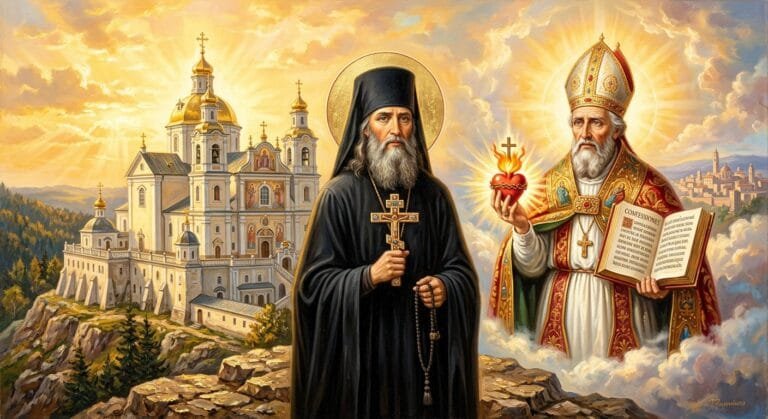
The constant search for What holiday is today or what vital ecclesiastical events, traditional customs, name days, and daily bible readings fall on this day, and how to utilize a powerful prayer to secure divine protection and blessings for our families is an ongoing concern for millions of believers worldwide. Consecrating our first thoughts to the Lord and following the liturgical calendar acts as an unshakeable spiritual compass, helping the soul to slow down, contemplate the eternal hagiography of the saints, and navigate the daily storms of life. August 28 represents a remarkably rich day in both the Eastern and Western Christian daily cycles. On this day, Eastern Orthodox Christians celebrate the Finding of the Relics of Saint Job of Pochaev and honor Saint Moses the Black, a converted Desert Father who overcame anger and passions. Meanwhile, the Catholic community prays to Saint Augustine of Hippo, the великий Doctor of Grace and writer of the Confessions. This complete guide deeply explores the histories of these great saints, folk wisdom, scripture of the day, name days, and complete liturgical prayers.
Understanding the liturgical calendar allows us to see how each day is consecrated to a specific saint or vital evangelical event. Our ancestors always began their days with heartfelt praise and thanksgiving, knowing that sincere dialogue with the Creator is the key to deep mental peace and invisible protection. When we recite the Lord’s Prayer (Our Father) or turn to God through the protective shield of our daily rule in the morning before starting our labor or in the evening to quiet our thoughts, we place our intellect under Divine custody, calming our hearts against daily worries, career struggles, and material debts. On this day, we also recall the tremendous value of Patristic wisdom for the daily guarding of the mind against wandering thoughts.
For strengthening faith and maintaining spiritual vigilance (nepsis) in the midst of daily temptations, we recommend turning to the spiritual treasury of the Christian East: The Philokalia in Ukrainian translation by S. Matiyash, where you will find priceless instructions of the Holy Fathers on how to obtain deep inner peace.
1. Orthodox Commemorations: Finding of the Relics of Saint Job of Pochaev and Saint Moses the Black
In the Eastern Orthodox liturgical calendar (Revised Julian / New Style), August 28 is dedicated to the hagiographical memory of two major figures: the Finding of the Relics of Saint Job of Pochaev (1659 AD) and Saint Moses the Black, a converted Ethiopian Desert Father.
The Finding of the Relics of Saint Job of Pochaev (1659 AD): Saint Job of Pochaev (in the world Ivan Zalizo, c. 1551–1651 AD) was a towering defender of Orthodoxy in Western Ukraine and the abbot of the Pochaev Monastery. He was famous for his extreme asceticism: he spent days and nights praying in a narrow cave where his tears literally hollowed out the stone. He founded the Pochaev printing house, published books, and performed miracles, departing this life in 1651 at age 100. In 1659, after appearing in a dream to Metropolitan Dionysius of Kyiv, his tomb was opened, and his relics were found completely incorrupt, secreting a sweet fragrance and healing the sick. Since then, August 28 is a major feast in Ukrainian Orthodoxy.
Saint Moses the Black (c. 330–405 AD): Saint Moses was an Ethiopian who in his youth was the violent leader of a gang of robbers in Egypt. Touched by God’s grace, he repented and fled to a desert monastery in Scetis. He fought against lust and anger through severe fasting and prayer, eventually becoming a beloved priest and spiritual father. When bandits attacked his monastery, he refused to use violence and accepted a martyr’s death alongside seven brothers, showing absolute fidelity. He is the patron saint of those seeking deliverance from anger and addictions.
2. Catholic Commemorations: Saint Augustine of Hippo, Doctor of Grace
In the Catholic Church, August 28 is the liturgical memorial of Saint Augustine of Hippo (354–430 AD) — one of the most brilliant Doctors of the Church, whose theological writings shaped Western civilization and Christian philosophy.
Saint Augustine was born in North Africa, became a brilliant teacher of rhetoric, and lived a life of worldly passions and philosophical errors for many years. However, the thirty-year tearful prayers of his mother, Saint Monica, and the preaching of Saint Ambrose of Milan eventually led to his conversion. As Bishop of Hippo, Augustine wrote his masterpieces «Confessions» (*Confessiones*) and «The City of God» (*De Civitate Dei*), defending the doctrine of grace against Pelagianism. He died during the Vandal siege of Hippo in 430 AD. He is the patron saint of theologians and searchers of truth.
3. Traditional Customs and Folk Wisdom of August 28
In traditional folk calendars, August 28 marked the end of the summer harvest and the transition of nature into autumn. Peasants baked fresh bread from the new grain harvest and gathered rowan berries, believing that rowan gathered on this day held special healing properties against winter illnesses.
Traditional Omens for August 28:
- A warm, sunny day on Augustine promises a long, dry, and peaceful autumn.
- Much spider webs in the air predicts a dry and warm September.
- Rain on this day predicts a very wet autumn with frequent morning mists.
- A thunderstorm on August 28 foretells a cold and snowy September.
What is strictly forbidden on this day (what not to do):
- Do not argue or engage in slander: Any anger or negative emotion on the day of Saint Moses the Black (who conquered anger) ruins the family’s spiritual shield, attracting depression and material debts.
- Do not throw away bread or leftovers: This was considered a sin against the spiritual law of gratitude, attracting poverty and scarcity.
- Do not refuse help to the needy: Saint Job and Saint Augustine always shared their daily bread with the poor.
4. Daily Devotional Laws: Gratitude and Love
The daily devotional life of a Christian operates under absolute spiritual laws. The first is the law of gratitude and spiritual abundance. The Apostle Paul instructs us: «In every thing give thanks: for this is the will of God in Christ Jesus concerning you» (1 Thess. 5:18). Offering heartfelt thanks to God at dawn for the gift of a new day, and at night for all the trials and lessons of the day, is the highest expression of faith. When we thank the Creator in the midst of life’s struggles, we release the full power of His grace, which shields our families from danger, disease, and financial collapse. A sincere prayer must always be anchored in gratitude, converting the human heart into a vessel ready to receive Divine power.
The second law is the active fulfillment of the Greatest Commandment of Love (Matthew 22:37-39). True reliance on God requires us to show active mercy toward others. Saint Augustine dedicated his life to protecting the poor. Saint Moses the Black died for his brothers, showing the highest form of love. When we support the poor, visit the sick, feed the hungry, and forgive our enemies, we become living channels of God’s love on earth. When we become channels of God’s love, our own lives are filled with His supernatural peace and family blessings.
5. Hesychastic Sobriety (Nepsis) according to the Desert Fathers
In the Eastern Orthodox Hesychastic tradition, spiritual sobriety (nepsis) is the foundation of salvation. Saint Job of Pochaev spent days and nights praying in his cave, guarding his intellect from all thoughts of pride. Saint Moses the Black conquered severe passions through continuous prayer on the prayer rope (komboskini).
We present a short, rhythmic Hesychastic prayer for the prayer rope, designed to preserve peace on August 28:
Lord Jesus Christ, Son of God, through the prayers of Saint Job of Pochaev, grant me peace of mind, a clean heart, and have mercy on me, a sinner.
6. The Power of Communal Prayer: Matthew 18:20 and the Pray.ee Community
Communal prayer carries an extraordinary, infallible promise of power from Jesus: «For where two or three are gathered together in my name, there am I in the midst of them» (Matthew 18:20). When believers unite their hearts in daily morning and evening intercession, the Holy Spirit descends to comfort the grieving, heal the sick, and restore peace to troubled households.
Dear brothers and sisters! We cordially invite you to join our daily prayer circle on Pray.ee. If you are currently facing difficult times, suffering from physical illnesses, legal battles, financial distress, debts, or family conflicts, please write your names (for health and protection) and your specific needs in the comments section below. Our global Christian family on Pray.ee will remember you daily in our prayers, asking for God’s urgent intervention, protection, and family blessings.
7. Real-Life Testimonies: Delivered from the Slavery of Addictions
Parish archives preserve countless testimonies regarding the miraculous help of Saint Moses and Saint Job. One such account comes from Svetlana, a mother from Odesa. For many years, her husband, Alexander, suffered from a severe alcohol addiction. She tried to treat him with various medical means, but this brought only temporary relief — depression, arguments, and debts completely shattered their home. A priest advised her to pray the Akathist to Saint Moses the Black daily and ask for the intercession of Saint Job of Pochaev. Svetlana began to pray with absolute trust. Within a few months of daily prayer, a miracle occurred: Alexander unexpectedly came to her in tears, asking for confession. He successfully completed his rehabilitation, completely gave up alcohol, returned to work, and became an active Christian. Svetlana testifies that the intercession of the holy fathers saved their family from destruction.
8. Liturgical Texts and Prayers for August 28
Troparion to Saint Job of Pochaev (Tone 4):
Having acquired the patience of your forefather, O Saint of Christ, you loved humility and lived in firm faith. You chose a desert life and zealously built the Pochaev monastery. Pray to Christ our God, venerable Father Job, that our souls may be saved. Amen.
Prayer to Saint Augustine of Hippo (for Wisdom and Grace):
O great hierarch Augustine, Doctor of Grace and light of Christian wisdom! You sought truth in the sinful world, but God’s grace transformed your heart through the prayers of your mother. Request for us from our Lord Jesus Christ sincere repentance, clarity of mind in our decisions, and a burning love for His Word, so that we may faithfully serve Him on earth and be worthy of His heavenly glory. Amen.
9. Frequently Asked Questions (FAQ)
Who celebrates their name day on August 28?
On this day, name days are celebrated by men with the names: Augustine, Moses, Job, Alexander, Basil, Vladimir, John, Michael, Nicholas, and women with the names: Monica, Anphisa.
Why is Saint Moses the Black prayed to for deliverance from alcoholism?
Because during his early life he was a violent robber chief, but conquered his passions and anger through deep repentance and desert asceticism.
What is the traditional custom on this day in folk calendar?
It is traditionally considered a time of final transition to autumn, gathering rowan berries, and baking fresh bread from the new harvest.
10. Wikipedia-Style References and Canonical Sources
1. Saint Job of Pochaev: Life and Miracles — Biography of the saintly Volyn abbot on Wikipedia: wikipedia.org (Job of Pochaev).
2. Orthodox Liturgical Calendar and Scripture Readings — Daily Bible readings, feast schedules of the Church on the official OCU Portal: pomisna.info (OCU Calendar).
3. Saint Augustine of Hippo: Life and Confessions — Biography of the holy bishop and teacher of the Church on the Catholic CREDO portal: credo.pro (Saint Augustine).
4. Patristic Exegesis on Spiritual Sobriety and Prayer Rules — Holy Fathers’ advice on daily prayer rules and canons on the Parish portal: parafia.org.ua (Patristic Heritage).