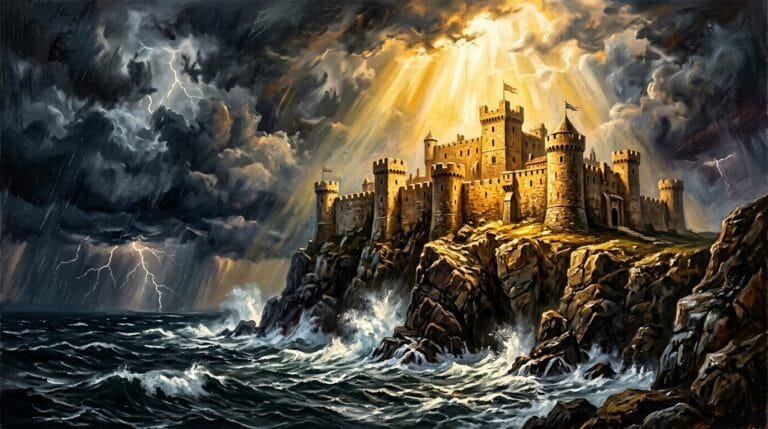
The question of what holiday is today or how to find an unshakeable inner fortress, mental quietude, and divine protection during the greatest life catastrophes, military threats, financial debts, and paralyzing fears is a daily concern for millions of believers. When the world around us seems to crumble and the news brings nothing but distress and despair, the Christian Church invites us to turn to one of the most famous and powerful protective texts of the Holy Scriptures—Psalm 46. Its prophetic, majestic opening words—“God is our refuge and strength, a very present help in trouble. Therefore we will not fear, even though the earth be removed…”—have served for centuries as an impenetrable spiritual shield for soldiers on the battlefield, families in danger zones, and every soul seeking divine care. This comprehensive Christian guide explores the biblical history of the Sons of Korah writing this psalm during a historic siege, reveals its deep theological meaning as a hymn of victorious faith, offers hesychastic techniques of mental sobriety, and compiles the full canonical texts.
Understanding the liturgical cycle allows us to realize that every single day is sanctified by the memory of saints and holy events. Historically, the faithful began and ended their days with prayer, as it serves as the ultimate key to mental quietude. When we recite the “Our Father” or practice Psalm 46 in the morning before starting our day or in times of acute danger, we surrender our mind and struggles to divine care, establishing a shield of peace before the anxieties, daily trials, or debts of the world. On this day, we also recall the great value of patristic wisdom for maintaining mental sobriety.
To deepen your faith and maintain your focus in prayer, we highly recommend exploring the profound writings of the Eastern Fathers, particularly the Ukrainian translation of the Philokalia, which details the practice of the prayer of the heart: Добротолюбіє в українському перекладі С. Матіяша.
1. Scriptural and Theological Interpretation of Psalm 46
In Christian theology, Psalm 46 (numbered as Psalm 45 in the Greek Septuagint and Latin Vulgate) is considered the pinnacle of biblical songs concerning complete trust in God. Written by the Sons of Korah (a unique Levitical family of liturgical composers), this psalm most likely arose during the miraculous delivery of Jerusalem from the invasion of the Assyrian King Sennacherib during the reign of King Hezekiah, when the Angel of the Lord destroyed 185,000 enemy soldiers in a single night. The psalm is a glorious manifesto of faith, declaring that God serves as our dual protection: He is our “refuge” (a passive shelter where we are safe and hidden) and our “strength” (an active power that grants us the courage to fight and overcome).
The concluding command of God to all humanity is particularly profound: “Be still, and know that I am God” (v. 10). In the Latin Vulgate, this is translated as *«vacate»* (empty yourselves, free your mind), and in the Greek Septuagint as *«scholasate»* (have leisure, experience inner stillness). The Lord commands us to stop our frantic human efforts, panic-driven plans of self-defense, or fears of wars and natural disasters, and in the silence of our hearts, acknowledge His absolute sovereignty. The psalm declares that even if the mountains fall into the heart of the seas and the nations rage, the Lord of hosts is with us, and the God of Jacob is our refuge (v. 11).
2. Patristic Tradition: The River of Grace and the Fortress of God
Over the centuries, the Holy Fathers have revealed the deep mystical meaning of Psalm 46. Saint Augustine of Hippo interpreted the image of the “river whose streams shall make glad the city of God” (v. 4) as a prophetic reference to the grace of the Holy Spirit, which irrigates the Church of Christ, giving the faithful unshakeable peace and joy in the midst of earthly trials. Saint John Chrysostom emphasized that this psalm teaches Christians spiritual courage: “Do not fear earthly catastrophes, for your refuge is built in the Heavens.” The Cross of Christ is the ultimate lighthouse and rock upon which we stand secure.
It is worth noting that Psalm 46 has immense significance in Christian history. This exact text inspired the great reformer Martin Luther in the 16th century to write his most famous hymn, *«Ein feste Burg ist unser Gott»* (“A Mighty Fortress Is Our God” or “Castillo fuerte es nuestro Dios”), which became the battle hymn of the Reformation, symbolizing faith and courage during severe political and religious upheavals in Europe. In the liturgical tradition, Psalm 46 is recited during national crises, wars, and natural disasters as a powerful shield of protection for families and nations.
3. The Spiritual Laws of Life: The Law of Peace and the Law of Love
The spiritual life operates in accordance with absolute laws. The first is the law of thanksgiving for divine protection. Saint Paul instructs: “In everything give thanks; for this is the will of God in Christ Jesus for you” (1 Thessalonians 5:18). Practicing gratitude in the midst of a life storm and declaring “God is our refuge and strength” is a profound demonstration of trust. When we thank the Creator during trials, we release the power of His grace, which shields our families from dangers, illnesses, and debts.
The second spiritual law is the execution of the Great Commandments of Love: to love God with all our heart and to love our neighbor as ourselves (Matthew 22:37-39). The Lord of hosts protects us because He is a God of love. Emulating Christ, we must live by the law of active mercy: helping those in disaster zones, welcoming refugees, sharing our bread with the hungry, and praying for our defenders. True trust in God is manifested in our readiness to be His hands of love and peace in a turbulent world.
4. Hesychastic Sobriety (Nepsis) and Holy Stillness
In the Eastern hesychastic tradition, Psalm 46 is the biblical foundation of the teaching on holy silence of the mind—hesychia. The divine command “Be still, and know that I am God” points to the necessity of stopping all passionate thoughts, anger, and panic before danger. To purify the mind, monks use wool prayer ropes (komboskini or chotki).
We encourage you to pray this rhythmic prayer to find inner stillness and overcome fear:
Lord Jesus Christ, Son of God, my Refuge and Strength, through the intercession of the Prophet King David, calm the storm, quiet my heart, and have mercy on me, a sinner.
5. The Power of Communal Prayer: Matthew 18:20 and the Pray.ee Circle
Communal prayer possesses an extraordinary promise from Christ Himself: “For where two or three are gathered together in My name, I am there in the midst of them” (Matthew 18:20). When a global community unites in prayer at dawn or in times of danger, the heavens pour out abundant grace.
We warmly invite you to join our global circle of prayer at Pray.ee. If you or your loved ones are currently in zones of military or natural danger, facing financial hardships, or suffering from severe anxieties, please write your name (for health and blessings) in the comments below. Our community will join in prayer to the Lord for your defense and peace.
6. Living Testimonies of Protection During Disasters
Our parish records contain many testimonies of miraculous help received through Psalm 46. One such account is from Anna’s family, who lived in a mountainous region prone to seismic activity. During a powerful earthquake, the ground shook violently, the walls of their house cracked, and a landslide was coming down from the slopes. The entire family was trapped. In absolute terror, Anna began to kneel and recite Psalm 46: “God is our refuge and strength… Therefore we will not fear, even though the earth be removed…”. They prayed with absolute trust, casting away panic. Massive rocks falling from the mountain miraculously bypassed their house, becoming wedged in the trees. Although the house was damaged, the family remained completely unharmed. Anna testifies that the words “The Lord of hosts is with us” became their real, invisible fortress that day. This is a living proof that God never abandons those who trust in Him.
7. Complete Text of Psalm 46
The Psalm in English:
1 God is our refuge and strength, a very present help in trouble.
2 Therefore will not we fear, though the earth be removed, and though the mountains be carried into the midst of the sea;
3 Though the waters thereof roar and be troubled, though the mountains shake with the swelling thereof. Selah.
4 There is a river, the streams whereof shall make glad the city of God, the holy place of the tabernacles of the Most High.
5 God is in the midst of her; she shall not be moved: God shall help her, and that right early.
6 The heathen raged, the kingdoms were moved: He uttered His voice, the earth melted.
7 The Lord of hosts is with us; the God of Jacob is our refuge. Selah.
8 Come, behold the works of the Lord, what desolations He hath made in the earth.
9 He maketh wars to cease unto the end of the earth; He breaketh the bow, and cutteth the spear in sunder; He burneth the chariot in the fire.
10 Be still, and know that I am God: I will be exalted among the heathen, I will be exalted in the earth.
11 The Lord of hosts is with us; the God of Jacob is our refuge. Selah. Amen.
8. Frequently Asked Questions (FAQ)
Why is Psalm 46 considered a powerful prayer in times of crisis?
Because it declares absolute trust in God as our “refuge” (safe shelter) and “strength” (source of courage), which operate independently of external threats or disasters.
What is the meaning of ‘Be still, and know that I am God’?
It is a divine command to let go of our panic, quiet our thoughts, stop our frantic human efforts, and in the silence of our hearts (hesychia) acknowledge His absolute control and victory.
Why is there a double numbering for this Psalm (45 and 46)?
In the Septuagint (Greek) and Vulgate (Latin) translations, it is numbered as Psalm 45. In the Hebrew original and Protestant Bibles, it is numbered as Psalm 46. The text is the same.
9. References (Canonical and Academic Sources)
1. The Sons of Korah and the History of Psalm 46 — Exegesis of the Assyrian siege, Hezekiah’s prayer, and the biblical canon on Wikipedia: wikipedia.org (Psalm 46).
2. Patristic Commentary on Psalm 46 and the River of Grace — Homilías of Saint Augustine and Saint John Chrysostom on the fortress of God on the liturgical portal: liturgiacatolica.org.
3. Divine Refuge in Disasters and National Crises — Practical advice on maintaining Christian dignity, stillness of heart, and prayer during trials: pomisna.info.