
28 March 2027, Sunday. According to the new style — the Revised Julian calendar followed by the Orthodox Church of Ukraine and the Ukrainian Greek Catholic Church — the church calendar for this day reads: Second Sunday of Great Lent, Saint Gregory Palamas. Communities that keep the old style (the Julian calendar) will observe the fixed commemorations of this day on 10 April; movable feasts fall on the same day in both styles.
This is the second Sunday of Great Lent.
The hymns at the services are sung in tone 2.
Saints and feasts commemorated on 28 March
- Second Sunday of Great Lent, Saint Gregory Palamas
- Venerable Hilarion the New, Abbot of Pelikitsky (c. 754)
- Venerable Stephen the Miracle-worker, hegumen of Triglia (c. 815)
- Venerable Martyr Eustratius of Kyiv Caves (1097)
- Martyrs Jonah and Barachisius and with them nine martyrs (c. 330)
Second Sunday of Great Lent, Saint Gregory Palamas
Gregory Palamas, Archbishop of Thessaloniki (14th century), taught that through prayer and purification of the heart, a person truly partakes in God’s grace — the uncreated light that the apostles saw on Tabor.
Venerable Martyr Eustratius of the Caves
The wealthy Kyivan Eustratius distributed his property and became a monk of the Pechersk Monastery, where he was noted for his strict fasting. In 1096, during a Polovtsian raid, he was captured and sold into slavery in Chersonesus. For refusing to renounce Christ, he was crucified on Easter in 1097. The relics of the saint rest in the Near Caves.
Venerable Hilarion the New
Hilarion was the abbot of the Pelikites Monastery in Asia Minor and suffered at the hands of iconoclasts who plundered the monastery.
Is 28 March 2027 a fast day?
Yes, Great Lent continues. Meat, dairy products, eggs and fish are not eaten; on Saturday and Sunday the fast is lighter — oil and wine are allowed. The fast is relaxed for the sick, pregnant women, children and travellers; the measure of fasting is best agreed with one’s priest.
Name days on 28 March
Those who celebrate their name day (angel day) today: Hilarion, Stephen (Stepan), Eustratius, Jonah. A name day is kept on the feast of the saint after whom a person is named; if there are several saints of that name, the commemoration that follows closest after the birthday is chosen.
What may and may not be done
Sunday is the Lord’s day: the faithful take part in the Liturgy, rest from everyday work and give time to their family and to good deeds. There are no special prohibitions on this day.
28 March in the old style
In churches that follow the Julian calendar, 28 March 2027 corresponds to 15 March by Julian reckoning. Among the fixed commemorations in their calendar for this day: Martyr Agapius and seven martyrs with him. The saints described in this article will be commemorated in the old style on 10 April. Movable feasts, which depend on the date of Pascha, are kept on the same day in both styles.
Frequently asked questions
What church feast is on 28 March 2027?
In the new style, 28 March 2027 is: Second Sunday of Great Lent, Saint Gregory Palamas. In the old-style calendar this day reads: Martyr Agapius and seven martyrs with him.
Who has a name day on 28 March?
According to the church calendar, name days on 28 March are celebrated by: Hilarion, Stephen (Stepan), Eustratius, Jonah.
May one eat meat on 28 March 2027?
No, it is a fast day: meat is not eaten.
What day of the week is 28 March 2027?
28 March 2027 falls on a Sunday.
Church calendar
- ← 27 March 2027: Martyr Matrona of Thessaloniki
- 29 March 2027: Holy Martyr Mark, Bishop of Arethusa →
- Church Calendar for 2027: all feasts, fasts and memorial days
Dates are given according to the Revised Julian calendar; the list of commemorations has been checked against the Orthodox church calendar of the Orthodox Church of Ukraine. This article is a translation of the Ukrainian original prepared by the Pray.ee editorial team; the translation is partly machine-made, so the spelling of some names may differ from the forms customary in English.
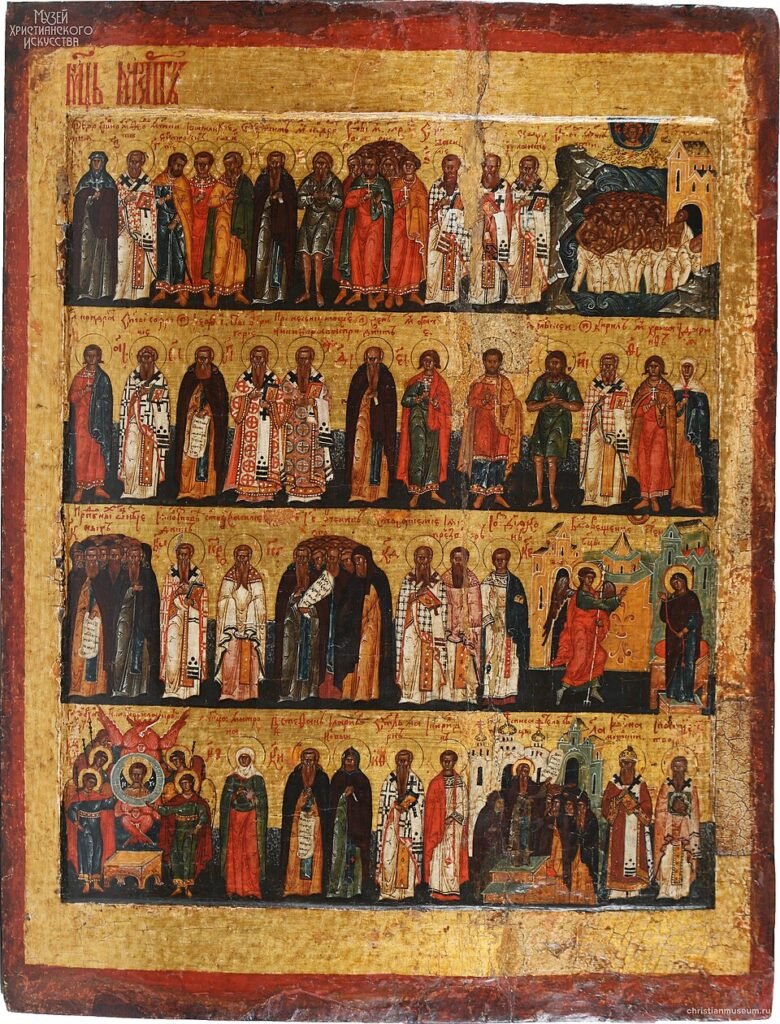
Image: Menaion icon for March with the saints of the month, 17th century. Source — Wikimedia Commons, public domain.

Comments (0)
Sign in to leave a comment
Sign in with Google or your account. You can comment completely anonymously 🕵️ by checking the anonymous option.
Sign in / RegisterNo comments yet. Be the first to start the discussion!